Juçara
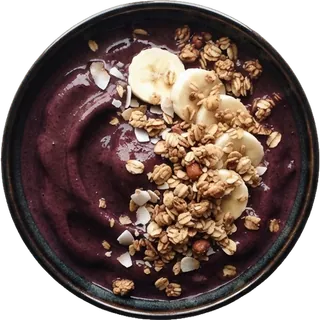
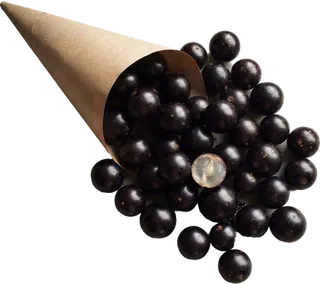
Juçara is the dark, oily pulp beaten from the fruit of the juçara palm, Euterpe edulis, in the Atlantic Forest of coastal São Paulo. Quilombola associations in Ubatuba soak and beat the small purple fruits with water, strain off the seeds, and freeze the pulp in bags and cups sold at local stands and markets.
How to order
Me vê uma tigela de juçara, sem açúcar, por favor.
The transaction runs in Portuguese, at the cooperative stand or the feira stall. The only thing to settle is sweetening, since some vendors stir sugar or guaraná syrup into the pulp before bagging it; asking “sem açúcar” or “puro” gets the plain pulp. Toppings such as granola or banana are ordered separately and added at the table, so they do not need to be refused in advance.
History
Juçara is Tupi-Guarani for Euterpe edulis, the solitary-stemmed palm of the Mata Atlântica on the São Paulo coast, including Ubatuba; the fruit is also called açaí-do-mato, for its resemblance to the Amazonian açaí, Euterpe oleracea. The species was once felled young for its palm heart, a practice that kills the plant, which has a single growing point; quilombola associations — descendants of communities founded by people who escaped enslavement — now harvest only the ripe fruit, leaving the palm standing to fruit again. Fruits ripen from March through June, are soaked in warm water to loosen the thin pulp layer, then run through a despolpadeira, a pulping machine that beats the fruit against a sieve to separate pulp from seed. The pulp is bagged and frozen the same day, sold at cooperative stands and the Ubatuba feira.
The pot, if it can be called that, holds only juçara fruit and water: the pulping machine adds nothing, and no dairy, egg, lard or stock enters at any stage of harvesting, beating or freezing. What has to be settled at the counter is not an animal question but a sugar one, since some stands sweeten the pulp or blend in banana or guaraná syrup before serving, while others bag it plain. Granola, tapioca and cut fruit served alongside are separate purchases, added at the table, and are plant as well. Because the pulp itself is frozen the same day it is beaten, there is nothing already mixed in beforehand that a customer could not ask to leave out.
Where to get it
Quilombola cooperative stands and the municipal market and feira in Ubatuba, on the São Paulo coast, sell frozen cups and bags of juçara pulp from March through June, for roughly R$8 to R$15 a cup.