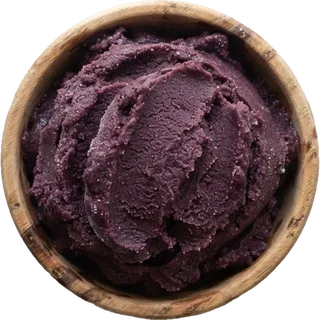
Açaí na Tigela
Frozen açaí pulp is blended with guaraná syrup and banana until it forms a thick, cold, dark purple cream, then spooned into a bowl and topped with granola and banana slices. Beach kiosks and juice bars across Rio de Janeiro and São Paulo sell it by the bowl, year-round, as a snack or light meal.
How to order
Me vê um açaí, sem mel, sem leite condensado e sem leite em pó, por favor.
The sale runs in Portuguese at the kiosk counter. Settling “sem mel” and “sem leite condensado” covers the two most common additions; adding “sem leite em pó” covers the powder some vendors dust over the granola. Since all three go on after the bowl is blended, in sight of the customer, asking at the moment of order is enough — nothing is mixed in beforehand.
History
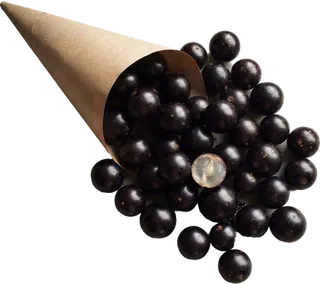
Açaí is a Tupi-derived name, from the Tupi-Guarani term for the fruit of the palm Euterpe oleracea, which grows along the rivers of the Amazon estuary in Pará. Ribeirinho communities harvest the berries, which are pressed and frozen into pulp near river towns such as Belém and Abaetetuba, then shipped south by truck. In Rio de Janeiro and São Paulo, beach kiosks, juice bars and academias thaw the pulp daily and blend it to order with guaraná syrup and banana, selling the bowl called açaí na tigela year-round, though demand peaks through the summer months of December to March.
The base itself is plant: açaí pulp, guaraná syrup and banana, whipped together with no dairy or egg involved in the blending. Animal product enters only as toppings added at the counter after the bowl is made — honey poured over, condensed milk stirred through or drizzled on top, or powdered milk dusted over the granola. Because these go on after blending, in full view of the customer, asking changes the bowl: what has to be settled before paying is whether honey, condensed milk or powdered milk are included, since vendors at busy kiosks add all three by default unless told otherwise.
Where to get it
Beach kiosks along Copacabana, Ipanema and Barra da Tijuca in Rio de Janeiro, and juice bars and academias across São Paulo, sell it year-round, busiest in the summer months of December to March, for about R$12 to R$25 a bowl depending on size and toppings.