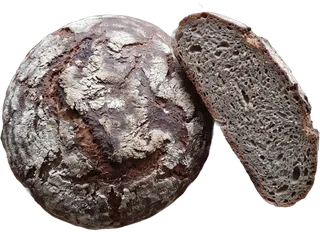
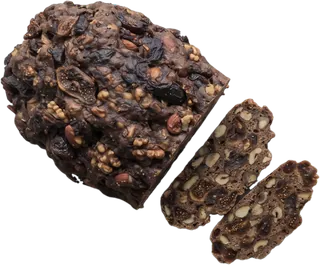
Kärntner Kletzen
Small hard pears left to over-ripen, then dried whole for eighteen hours until they shrivel, darken and turn honey-sweet — Carinthia's winter fruit.
How to order
Haben Sie Kletzen zum Einkaufen – die getrockneten Birnen, ganz ohne Zusatz?
Buy them as dried fruit from the Presidio producers. Note that Kletzenbrot usually contains honey and Kletzennudeln are filled with curd and egg, so neither is vegan.
History
Drying fruit has a tradition in Carinthia reaching back millennia, and the Kletzenbirne is its emblem. Santonino, secretary to the Patriarch of Aquileia, already described in the Middle Ages, travelling through the Drautal, how highly the fruit was valued; under the Habsburg monarchy Carinthian Kletzen were produced for the Viennese market. The pears are picked, allowed to after-ripen to the state Carinthians call mohle — still firm outside, soft within — and then dried whole in an oven at sixty to seventy degrees for around eighteen hours. Only this process gives them their aroma and soft flesh.
They were a vitamin supply for hard winters, and nearly disappeared when the trees became inconvenient: pear wood is valuable, and windfall fruit is a nuisance in a modern orchard. In 2022, after the Gailtal organic farmer Leopold Feichtinger and Friulian partners spent a year surveying and mapping the entire tree stock, the Kletzenbirne was recognised as the world's first cross-border Slow Food Presidio, shared between Carinthia, Friuli and Slovenia — the second Carinthian Presidio after Lesachtaler Brot in 2018. The same dried pear turns up as the filling of Kletzennudeln in the Gailtal, of sweet cjarsons in Friuli and of Bovški krafi in the Soča valley.
A Kletze is a pear and nothing else: no sugar, no sulphur, no animal ingredient at any stage. The caution is about what gets made from it. Kletzenbrot usually contains honey, and Kletzennudeln are filled with Topfen — curd — and bound with egg in most recipes, so the pear is vegan where the famous dishes built on it are not.
Where to get it
Farm shops and Slow Food producers around Hermagor and the Gailtal, the Slow Food Greissler in Kötschach-Mauthen, and Advent markets across southern Carinthia.