Kambro
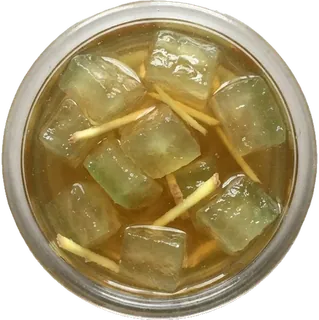
A fist-sized succulent root, dug from sandy Karoo and Kalahari soil, split open for its watery white flesh, chewed raw by farmworkers and travellers crossing dry country. Sliced and simmered with sugar and ginger, it becomes a thick amber preserve sold in jars across the Northern Cape.
How to order
Het u kambrokonfyt, asseblief?
Kambrokonfyt is only root, sugar and ginger, so there is nothing to check before it is eaten; asking at a padstal for "kambrokonfyt, asseblief" is enough, and the counter in these Northern Cape towns runs in Afrikaans, not English.
History
Kambro is the Afrikaans name for Fockea angustifolia, a succulent vine whose root swells underground into a tuber that can weigh several kilograms, found across the dry Karoo and the Kalahari in the Northern Cape. Khoe-San herders and later Nama and trekboer farmers dug it from the sand as a source of water and food on long treks between water points, a use tied to the dispossession of Khoe-San land by colonial and trekboer expansion into the interior. Sliced raw it is eaten on the road; cooked down with sugar and ginger it becomes kambrokonfyt, a preserve still made in farmhouses around Kenhardt and Kakamas.
Everything in the pot is plant: the root itself, water, sugar and fresh ginger, all simmered down into syrup and fruit. Eaten straight from the ground, kambro is nothing but a root and whatever water it holds. No animal product enters at any stage of digging, slicing or boiling, so nothing needs to be checked before it is eaten raw or asked for as konfyt.
Where to get it
Farm stalls and padstalle along the N14 and N10 through the Northern Cape, in towns like Kenhardt, Kakamas and Upington, sell jars of kambrokonfyt year-round for roughly R40 to R60; the raw root itself is dug from the veld on Kalahari farms rather than sold in shops.