Khodar bil Salsa
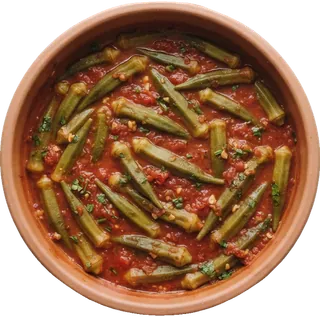
Peas, green beans or okra are simmered in tomato sauce with a garlic taqliya and served over rice, a standard home and lunch-counter plate across Egypt. The sourness comes from the reduced tomato and the garlic fried hard at the end.
How to order
ممكن الخضار بالصلصة من غير مرقة لحمة، والتقلية بزيت مش سمنة لو سمحت؟
Ask specifically about both the broth and the frying fat, since either can carry animal product even on a fasting-table version. Say ‘من غير مرقة، والتقلية بزيت لو سمحت’ to cover the sauce and the garlic taqliya in one line.
History
Khodar bil salsa is documented as everyday home and lunch-counter cooking across Egyptian cities and villages, made with whichever vegetable is in season: peas and green beans in spring, okra in summer. It is cooked in a single pot, the vegetable added to a tomato sauce and finished with a garlic taqliya poured in hot. Households make it on weekdays as well as during Coptic fasting periods, when it appears on the siyami table alongside rice or bread. Cheap vegetable stalls and neighborhood cook-and-sell counters, called mahal akl beity or taagen, serve it by the plate, ladled from a shared pot kept warm through the lunch hours.
The standard version is built on meat or chicken broth for the sauce, and the garlic taqliya is usually fried in ghee or samna rather than oil, so this dish is vegan on request, not by default. A diner who wants the plant-based version asks for the sauce made with water or vegetable stock and the taqliya fried in oil. Because stock cubes are common in home and counter kitchens, asking about the broth matters as much as asking about the fat, and the word siyami alone does not settle either question.
Where to get it
Neighborhood home-style cook-and-sell counters and small restaurants serving taagen dishes carry it by the plate at lunchtime, and it appears more widely during Coptic fasting periods when vegetable stalls sell peas, green beans or okra by season.