Mahshi Koronb
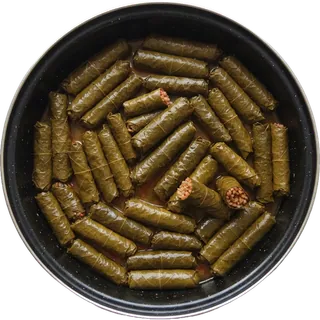
Mahshi koronb wraps blanched cabbage leaves around rice seasoned with dill, mint and tomato, rolled tight and simmered until the leaves turn soft and translucent. It appears on Egyptian tables year-round, from home kitchens in Cairo to cookshops that sell it by the kilo alongside other stuffed vegetables.
How to order
ممكن محشي كرنب بزيت مش سمنة، من غير مرقة عضم لو سمحت
Ask specifically for the fasting version and for oil rather than ghee: ‘بزيت مش سمنة، من غير عضم لو سمحت’ confirms the fat and the bone broth are both left out, since the standard version is not plant-based.
History
Stuffed cabbage is cooked across Egypt in home kitchens and in neighborhood cookshops, where cabbage leaves are blanched until pliable, filled with a seasoned rice mixture, rolled, and packed tight in a pot. Documented from household cookbooks and street-food surveys of twentieth-century Cairo and Alexandria, it sits alongside mahshi kousa (zucchini) and mahshi waraq enab (vine leaves) as part of the same stuffing tradition. It is prepared year-round but most common in winter, when cabbage is cheapest and in season. Families make it for ordinary weekday meals and for gatherings, and small cookshops sell it alongside other mahshi varieties by weight.
The everyday version lines the bottom of the pot with bones, usually beef or lamb, so the rolls cook sitting in a seasoned broth, and the rice filling is mixed with ghee or butter before rolling. During Coptic fasting periods the household version drops both: the pot is lined with sliced tomato or extra cabbage leaves instead of bones, the cooking liquid is a vegetable stock, and the rice is mixed with vegetable oil. Asking for the fasting (siyami) version gets this plant-based preparation, but a cook may default to ghee unless asked, so naming the oil specifically is still necessary.
Where to get it
Home-cooked in most Egyptian households and sold by the kilo at neighborhood cookshops (mahallat mahshi) in Cairo, Alexandria and provincial towns, with cabbage most plentiful and cheapest in winter.