Libba
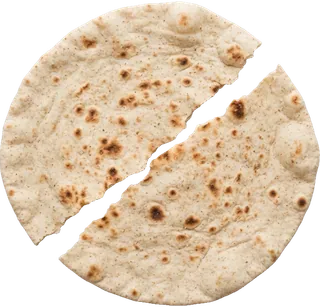
Libba is a round loaf of wheat flour and water dough buried directly in sand heated by a wood fire, left to bake under the embers, then brushed free of ash and sand before it is torn open and eaten.
How to order
ممكن لبة من غير سمنة لو سمحت
Since the dough itself has nothing animal in it, the only thing to check is whether ghee is poured on after baking; saying ‘من غير سمنة لو سمحت’ asks for the loaf plain.
History
Libba is baked by Bedouin households of Sinai, documented around Arish in the north and Dahab on the Gulf of Aqaba coast, among communities who travel or camp away from fixed ovens. The dough is flattened, laid in a pit of sand heated by a wood fire, covered over, and left to bake under the coals for a set stretch before being dug out. It is broken off and shared at a meal rather than sliced, and is as often made for guests arriving at a camp as for a household's own meal. The method answers a practical need - no oven, no metal tray, flour and water and heat already on hand in the desert.
The plain dough is only wheat flour, water and usually salt, with no animal ingredient in it, so libba made this way is naturally vegan. The point where it can change is after baking: in some camps a cook pours samna over the hot loaf before serving, as a finishing fat rather than part of the dough itself. A diner who wants the loaf exactly as it comes out of the sand, with nothing added, should ask for it plain and watch for that pour rather than assume it never happens.
Where to get it
Libba is made at Bedouin-run camps and guesthouses in Sinai, around Arish and along the Dahab coast, usually baked to order for a meal rather than sold ready-made in a shop or market.