Weika
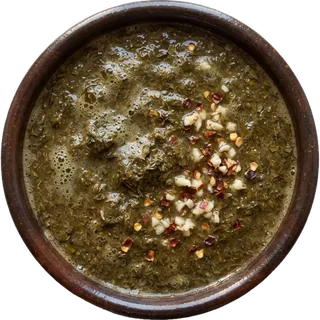
Dried okra, pounded or left whole, is beaten into hot broth with a wooden mifrak until the pot thickens into a dark, ropy stew, eaten over rice or bread as a midday meal across Esna and Qina.
How to order
الويكة من غير مرقة لحمة، ممكن بمرقة خضار، لو سمحت؟
Weika is usually cooked in meat or chicken broth from the start, so ask before the pot goes on with ‘من غير مرقة لحمة، بمرقة خضار لو سمحت’ (without meat broth, with vegetable broth please); asking once it is already simmering is too late since the okra absorbs the liquid as it cooks.
History
Weika is a Saidi dish made in households across Esna and Qina in Upper Egypt, where dried okra (bamya naashfa) is dropped into simmering broth and beaten with a wooden mifrak, a ridged whisk, until the liquid turns thick and dark. It is documented as an everyday lunch rather than a festive dish, eaten with rice, bread or on its own, and the drying of okra in late summer for use through the year is part of the same household routine. The name and the whisking method are specific to Upper Egypt; similar dried-okra stews appear further south in Sudan under different names.
The okra, the mifrak method and the drying process are entirely plant; the animal ingredient is the broth itself, which in most Esna and Qina households is made with meat or chicken stock, sometimes reinforced with a bouillon cube. Vegetable broth or water seasoned with garlic, coriander and chile is a plant substitute, but it changes the dish from its standard form rather than being how weika is usually cooked. A diner asking for a plant version needs to specify this before the pot is started, since the okra and liquid cook together from the beginning and cannot easily be separated once combined.
Where to get it
Weika is served at home-style lunch counters and family tables in Esna and Qina rather than in formal restaurants, usually at midday with rice or bread, and dried okra for it is sold year-round in Upper Egyptian markets from the previous summer's harvest.