Eish Shamsi
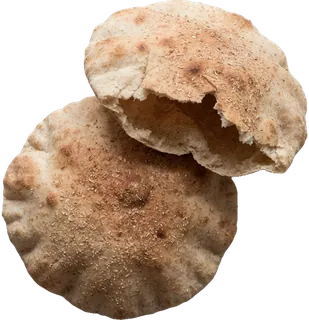
Eish shamsi is a thick, sun-leavened flatbread from Upper Egypt, made in Luxor and Qena governorates by proving wheat dough outdoors before baking in a mud-brick oven. The sun exposure and open-air fermentation give the crust its sourness and the crumb a dense, earthy chew.
How to order
واحد عيش شمسي لو سمحت
The loaf is plain dough and leaven, but it is worth confirming nothing has been added at the oven; ask ‘فيه سمنة ولا لبن في العيش ده؟’ to check for ghee or milk in that particular batch.
History
Households in the villages around Luxor and Qinā prepare eish shamsi by mixing wheat flour, water and salt with a portion of leaven kept from a previous batch, then shaping flat rounds and setting them outside to catch direct sun for several hours. This speeds fermentation before the loaves go into a mud oven fired with dried dung or crop waste. The practice is documented across Saidi villages as an everyday method tied to wheat-growing seasons along the Nile, distinct from the thinner baladi bread sold in urban bakeries. The thick crust and long sun-fermentation are what separate it from standard flatbreads found elsewhere in Egypt.
Eish shamsi is naturally vegan: the standard recipe uses only wheat flour, water, salt and a household leaven carried over from an earlier dough, with no milk, egg or fat worked in. There is no samna or ghee brushed on the surface, as there can be with other Egyptian breads, since the loaf is left plain to develop its crust in the sun and the oven's dry heat. A diner only needs to confirm that a given bakery has not enriched a batch with milk or clarified butter, which some urban reproductions do to soften the crumb.
Where to get it
Found at village mud ovens and small home bakeries in Luxor and Qinā governorates, often sold straight from the oven rather than through city bread shops.