Korinthiaki stafida Vostitsa
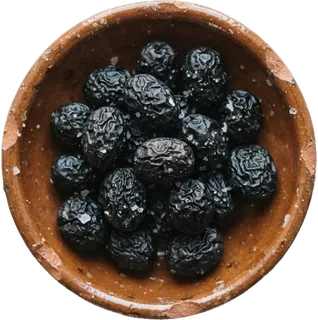
Korinthiaki stafida Vostitsa is a small, dark, seedless currant produced by sun-drying the Black Corinth grape on the hillsides above Aigio, in the Vostitsa district of West Greece. The grapes shrivel on racks or ground mats until only a concentrated, sweet-tart raisin remains, used whole in cooking and baking.
How to order
Θα ήθελα κορινθιακή σταφίδα, παρακαλώ.
Asking for “Θα ήθελα κορινθιακή σταφίδα, παρακαλώ” (I would like Corinthian currants, please) is enough, since the plain fruit is naturally vegan; checking the label is only necessary for flavored, sugar-glazed, or chocolate-dipped currant mixes.
History
Vostitsa currants come from the Black Corinth (Korinthiaki) grape grown on terraces above Aigio, on the Gulf of Corinth, in West Greece. Producers pick the grapes in August and spread them on open-air drying floors or mats for two to three weeks until they shrink into small, nearly black currants. The name Vostitsa is a protected designation of origin (PDO) tied to this district. Currants dried this way have been exported since at least the nineteenth century, when the crop underpinned much of Greece's foreign trade, and growers still harvest and dry them by hand in family-run vineyards each summer.
The currants themselves are entirely plant material: ripe grapes reduced by sun and air, with no further ingredient added during drying. The one stage where an animal product could enter is packing, when some dried-fruit producers brush a film of oil onto the fruit to keep pieces from clumping. For Vostitsa currants that oil is vegetable, applied at the processing stage rather than at the table, so there is no animal-derived step to inquire about when buying or eating them.
Where to get it
Vostitsa currants are sold in grocery stores, open-air markets, and specialty food shops across West Greece, particularly around Aigio and Patra, with the new crop reaching shelves from late summer through autumn after the August harvest and drying period.