Mayi
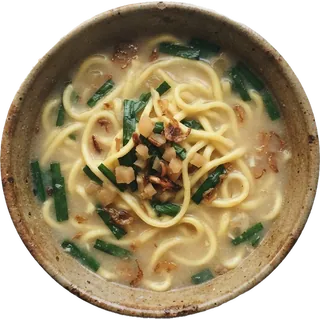
A dark green summer soup of young jute leaves, rubbed and rinsed until the bitterness washes out, then simmered with sweet potato. It is a Taichung dish, sold in the city's markets from May to September.
How to order
老闆,一碗麻薏湯,不要吻仔魚。
The only animal ingredient is the dried fish stirred in at the end, so say 「不要加吻仔魚和小魚乾」, meaning without whitebait or dried fish; some stalls also add bonito powder, which is worth asking about.
History
Mayi is the young leaf and shoot of jute, a fibre crop grown widely in central Taiwan when sacks and rope were needed for rice and sugar, and concentrated around Litoudian, today's Nantun District. The leaves are stripped from the stems and midribs, then rubbed and rinsed three or four times until the bitter green liquid runs clear, which is the slow part of the work. What remains is simmered with cubed sweet potato into a thick soup, eaten hot or chilled. The Maywei Culture Museum, set up in 2004 on the fifth floor of the Wanhe Temple cultural building in Nantun, documents the crop and the dish.
The soup itself is leaves, sweet potato, water and salt, thickened by the mucilage in the leaves and sometimes a spoon of sweet potato starch. The animal ingredient that usually enters is a handful of small dried fish or whitebait, added near the end for salt and savour; some cooks also stir in bonito powder. Both do the job that a pinch of salt and the sweetness of the potato can do on their own, and a vegetarian stall in Taichung's Jianguo Market sells a summer version made without the fish. At a market stall, ask for the bowl without them.
Where to get it
Taichung market stalls from May to September — Nantun Market, the Second Market on Sanmin Road, Xiangshang Market and Jianguo Market, where a vegetarian stall makes it without fish. It is especially sought at the Dragon Boat Festival, eaten alongside rice dumplings.