Da Mian Geng
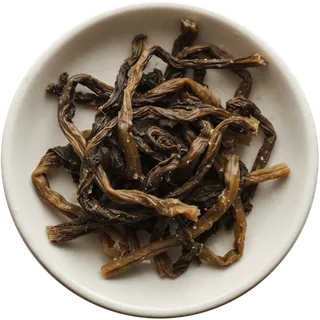
Thick alkaline wheat noodles simmered until they swell and thicken their own broth, served in a bowl with pickled radish, garlic chives and fried shallot. It is eaten in Taichung and almost nowhere else.
How to order
老闆,一碗大麵羹,素的。
Ask whether the pot is the vegetarian one — 「有素的大麵羹嗎?湯頭有大骨嗎?油蔥酥是豬油炸的嗎?」 — covering the stock, the dried shrimp and the shallot crisps in one question.
History
The noodles are made with edible alkali, which stiffens the gluten, turns the dough yellow and lets the strands swell without collapsing after long cooking. Starch leaches out as they simmer, so the broth thickens without any starch slurry; the name is usually explained as a Taiwanese pun, since geng and the word for alkali sound alike. The dish is tied to the post-war decades in central Taiwan, when alkali-treated noodles stretched a small portion into a filling one. Stalls open early for breakfast, and Yingcai Da Mian Geng on Yingcai Road in the North District is among the long-running addresses.
A standard bowl is not vegan. Stalls build the flavour by frying dried shrimp, minced pork and shallot in oil before the water goes in, some use pork-bone stock, and the fried shallot crisps scattered on top are often fried in lard. The noodles themselves are flour, water and alkali, and the pickled radish and garlic chives are plant, so the animal content sits entirely in the topping and the stock. Several Taichung stalls sell only a vegetarian bowl, using soy-skin or shiitake in place of shrimp and pork; at a mixed stall, ask for the vegetarian pot rather than for ingredients to be left out.
Where to get it
Breakfast stalls across central Taichung, including Yingcai Da Mian Geng on Yingcai Road and Dade Da Mian Geng on Dade Street in the North District, which keeps a vegetarian pot; dedicated vegetarian stalls trade on Shifu Road in the Central District and Changping Road in Beitun.