Fucai
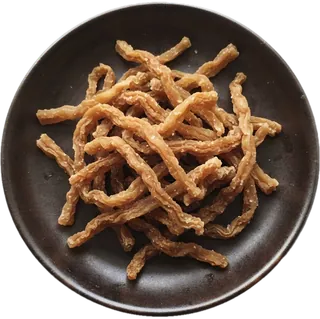
Hakka half-dried pickled mustard green, salted into sour cabbage, sun-dried on bamboo poles and then packed hard into rice-wine bottles or jars to finish fermenting. Gongguan Township in Miaoli County is the main producing area.
How to order
老闆,福菜一瓶多少?
The bottled preserve is only mustard green and salt, so buying it raises no question; ordering it cooked does, so ask '福菜湯是大骨熬的嗎?' — whether the fucai soup is made on pork bones — since the usual pairing is pork.
History
Large mustard greens are planted in Gongguan in mid-September, after the second rice crop is off the ground, and cut about two months later. The leaves are left in the field to wilt for a day or three so they do not snap, then rubbed with coarse salt, layered into vats under stones and left to sour. That is suan cai. For fucai the sour cabbage is washed, hung on bamboo poles and sun-dried until roughly a third of its water remains, torn into strips and tamped into bottles with a stick. Jars are stood upside down to keep air out, which gave the older written name fu cai, inverted vegetable.
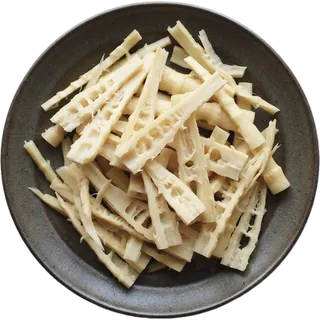
Fucai is three things: mustard green, salt and sunlight. There is no stock, no fish sauce and no shrimp in the preserve itself, and the sourness comes from the lactic fermentation that the tight packing and the inverted bottle protect. Dried further it becomes mei gan cai. The animal ingredient enters at the point of cooking, because the standard Hakka dishes built on it are a pork-slice soup and a steamed dish of fucai under belly pork, and restaurant fucai soup is often based on pork bones. Cooked with bamboo shoots, bean curd or winter melon it stays plant-based.
Where to get it
The Gongguan farmers' association sells bottled and vacuum-packed fucai from its own processing plant, and roadside farm shops along Provincial Highway 6 sell it by the bottle; the pickling season, when greens are drying across the township's yards, runs from late autumn to the weeks before Lunar New Year.