Ai Ban
A Hakka steamed cake of glutinous rice dough coloured and scented with mugwort, filled with sweetened red bean or with fried dried radish, made around the Qingming grave-sweeping festival and sold year-round in Sanyi Township, Miaoli County.
How to order
老闆,艾粄我要甜的,紅豆餡的兩個。
Ask for the sweet one — '甜的、紅豆餡' — because the savoury filling is fried dried radish with minced pork and dried shrimp; shops that make both will say plainly which tray is which.
History
Mugwort picked in early spring is blanched to take out the bitterness, pounded or blended, and worked into a dough of glutinous and long-grain rice flour, which turns a deep green. The dough is shaped round the filling, set on a banana or shell-ginger leaf and steamed. Hakka households make it for Qingming, when it is carried to the graves, which is why it is also called mu ban, grave cake; a saying holds that eating ai ban around Qingming keeps illness away for the year. In Sanyi the Hakka rice-cake shops along Shuimei Street sell it beside red bean ban and brown sugar steamed cake.
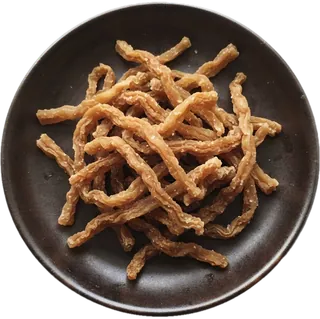
The dough is plant-based — rice flour, mugwort, water, sugar or salt — so everything turns on the filling. The sweet filling is red bean or mung bean paste and contains no animal ingredient. The savoury filling is where pork enters: dried radish shreds are fried with shiitake, dried shrimp and shallot, usually with minced pork and often in lard, and that version is the one sold as cai bao, the cabbage-shaped Hakka vegetable bun. Asking for the red bean cake rather than the savoury one settles it; one Sanyi rice-cake shop sells only the filled savoury bun as its non-vegetarian item.
Where to get it
Hakka rice-cake shops along Shuimei Street in Sanyi, where it is sold alongside red bean cakes and brown sugar steamed cake, and at the Sanyi morning market; supply is heaviest in the weeks around Qingming in early April.