Mekhallel Lamoun
Whole limes are packed into jars with coarse salt and left in the sun for several weeks until the rinds soften and darken. The cured limes are cut into wedges and served alongside ful medames and other bean plates across Egypt.
How to order
ممكن طبق مخلل لمون لو سمحت
Mekhallel lamoun is plant-based as sold, so no special order is needed; a diner can simply ask ‘ده بملح وليمون بس؟’ to confirm the jar at a particular stall holds only lime and salt and has not been touched by a meat-based side dish's serving spoon.
History
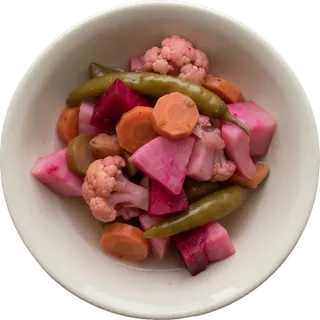
Mekhallel lamoun is prepared in home kitchens and sold ready-made by Egyptian grocers (بقالة) who stock jars of mixed mekhallel - pickled turnip, carrot and lemon - alongside olives and dairy. Whole limes are layered with coarse salt in glass jars, sometimes with a few slices of fresh chili or extra lemon juice, and left to cure on a windowsill or shelf for four to eight weeks until the rind turns soft and brown-green. The practice is common across Egypt's cities and villages, from Cairo's ful and taameya carts to household kitchens in Alexandria and the Delta, where jars are kept running year-round, topped up with new limes as older ones are used.
The recipe for mekhallel lamoun uses only limes, salt and sometimes added lemon juice or chili, with no animal ingredient in any version. It is not a siyami or fasting-season substitution but the standard Egyptian preserved lemon year-round; the only variation between households is how long the limes cure and how much salt or water is used, not whether an animal product is added. Diners buying it at a bean-plate counter need not ask about samna or broth, since none enters the brine at any stage; the sole caution is cross-contact if the serving spoon has touched a meat-based side dish on the same counter.
Where to get it
Sold in jars by Egyptian grocers (بقالة) and set out as a side at ful and taameya counters across Cairo, Alexandria and the Delta; many households also keep a jar going at home year-round.