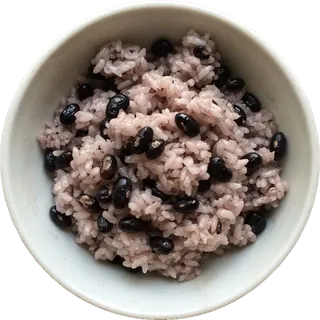
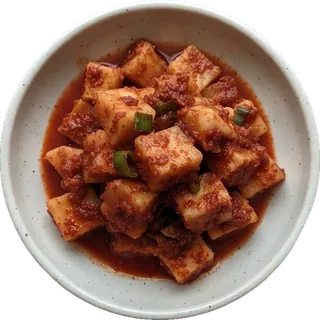
Nurungji
Rice left clinging to the bottom of a hot pot scorches into a thin golden layer, scraped off in one sheet and eaten dry as a snack, or boiled with water into a toasted porridge. Seoul's hanjeongsik restaurants serve it last, after rice and soup, as a quiet close to the meal.
How to order
누룽지 하나 주세요.
Nurungji is scorched rice and water only, so there is no stock, sauce or garnish built into the pot for a kitchen to leave out; asking with “누룽지 주세요” is enough, whether it comes dry or simmered into sungnyung.
History
Nurungji (누룽지) forms on its own at the bottom of a gamasot, the heavy iron cauldron set into a farmhouse ondol kitchen, where rice left over low heat scorches into a thin crust rather than burning. Cooks scraped it free with a wooden paddle and kept it, nothing wasted, through the lean years of Japanese colonial rule and the postwar poverty that followed the Korean War, when it filled children's stomachs between meals. Electric rice cookers largely replaced the gamasot by the 1980s, so most nurungji eaten in Seoul today is made deliberately, in a dry pan or a dolsot, rather than left to happen by accident.
Nurungji itself is rice and heat, nothing else: no jeotgal or fish sauce goes into a kimchi paste here, because there is no paste; no myeolchi-yuksu, the dried anchovy and kelp stock that underlies most Korean soups, is involved, because the porridge made from it, sungnyung, is simply nurungji simmered back in plain water; and no egg garnish sits on top. Commercial snack versions sometimes add a pinch of salt or a trace of oil before the sheet is toasted, but no animal product enters at any stage, so there is nothing to ask a kitchen to leave out.
Where to get it
Seoul market stalls, especially around Tongin and Gwangjang markets, sell packaged nurungji sheets and snack bars for ₩3,000-6,000, while hanjeongsik restaurants in Insadong and Bukchon serve it simmered into sungnyung as the last course of a set meal priced ₩20,000-40,000.