Pão de Casa
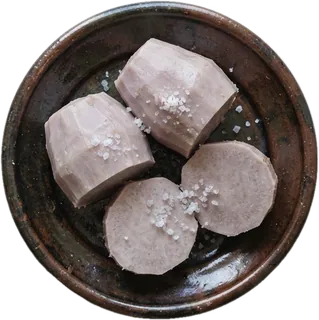
Pão de casa is a round wheat loaf baked in Madeira households, with cooked sweet potato worked into the dough and a piece of the previous batch used to start the ferment. It keeps soft for several days.
How to order
Queria um pão de casa, por favor.
Little needs clarifying beyond freshness; ask “é de hoje?” to check it was baked that day, since the loaf is best eaten fresh or toasted once it has firmed up.
History
Households across Madeira bake pão de casa in round loaves, working boiled and mashed sweet potato into the wheat dough so it makes up roughly a sixth of the mix. The dough is raised with a piece of the previous week's batch kept back and fed rather than with fresh yeast bought in, a practice that varies little from kitchen to kitchen. Loaves are baked year-round, often on a weekly rhythm, and eaten plain, split for sandwiches, or toasted once they start to firm up.
The dough is wheat flour and sweet potato, both plant, raised with a captured piece of dough rather than with any animal product. No animal ingredient has a traditional place in pão de casa. The comparable local enrichment point is the butter or lard sometimes worked into bolo do caco, Madeira's other everyday bread, or spread on it at the table; pão de casa's dough takes neither, carrying only flour, sweet potato, water, salt and its own starter.
Where to get it
Bakeries, village padarias and market stalls across Madeira sell it year-round, usually baked in the early morning for same-day sale.