Petanik
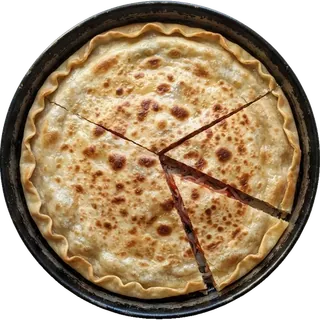
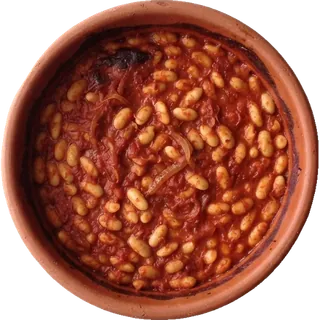
Pre-baked petë sheets, torn or layered whole, are moistened with bean broth and packed with cooked beans, then returned to the oven until the layers soften into one dense cake. It is Korçë winter food, made in December and January when a household has petë left over from an earlier bake.
How to order
Një copë petanik me vaj, pa gjalpë, ju lutem.
Say “Pa gjalpë, me vaj ulliri” — without butter, with olive oil — when ordering, and a baker preparing it to order will use oil instead. A tray already baked and cooling in the counter case has the butter already brushed in, and cannot be changed after the fact.
History
Petanik belongs to Korçë and the villages around it, part of the same winter kitchen that keeps petë, the pastry sheets rolled for byrek and lakror, ready on hand. When a household has sheets left from an earlier bake and dried beans set aside from the autumn zahire, the two are combined rather than wasted: the beans are boiled soft, the sheets moistened with their broth, and the whole dish baked again until it holds as one piece. It is made from December through February, when stored beans carry a kitchen short on fresh vegetables, a frugality sharpened under the collectivised farms and shortages of the communist decades.
The base is plant throughout: pastry sheets, boiled beans, onion and oil. What has to be settled is the fat brushed between the sheets as they are stacked and moistened — most cooks use gjalpë, melted butter, for richness and for colour on top, and some rub a little kos into the top layer before the final bake. Asking for a dish built with vaj ulliri instead removes both, provided it is said before the sheets go into the tray, since butter already worked between baked layers cannot be taken back out.
Where to get it
Furra and home kitchens across Korçë qark, from the town itself out to Voskopojë and Dardhë, in the cold months from December to February; a slice at a bakery counter runs 100-150 lekë.