Siddu
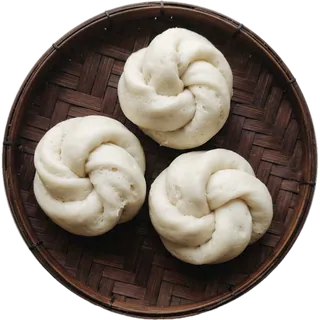
Siddu is a steamed wheat dumpling from the Mandi and Kullu valleys of Himachal Pradesh, its yeasted dough wrapped around a filling of walnut, poppy seed or opium-poppy seed. It is traditionally served soaked in ghee, eaten through the winter months as a filling midday meal.
How to order
सिड्डू घी के बिना दीजिए।
At stalls in Mandi and Kullu, siddu is commonly handed over already soaked in ghee, so ask first, ‘क्या सिड्डू में घी डाला है?’, and then request it with mustard oil instead.
History
Siddu is made in hill households of Mandi, Kullu and parts of Shimla district in Himachal Pradesh, where wheat dough is leavened with yeast or baking soda, shaped into balls, filled with crushed walnut, poppy seed or opium-poppy seed, and steamed over simmering water. It is documented in these valleys as a winter dish, eaten through the cold months when stored walnuts and poppy seed are used up before the next harvest. Dhabas along the Mandi-Kullu road and stalls at the Mandi Shivratri fair serve it, and many households still steam it at home rather than buy it.
The dough, made from wheat flour, yeast or soda, salt and water, and the filling of walnut and poppy seed are plant in every standard recipe. The animal ingredient enters only at the end, when cooked siddu is split and soaked in ghee before serving, a step treated as integral to the dish in most Himachal kitchens and dhabas. Asking for siddu without this ghee soak, or dressed instead in mustard oil, gives a version with no animal ingredient at any stage, and most cooks will do this on request since the ghee is added after steaming rather than cooked into the dough or filling itself.
Where to get it
Dhabas and roadside stalls along the Mandi-Kullu highway, winter markets in Himachal Pradesh's hill towns, and stands at the Mandi Shivratri fair sell siddu through the cold months; many households also steam it at home.