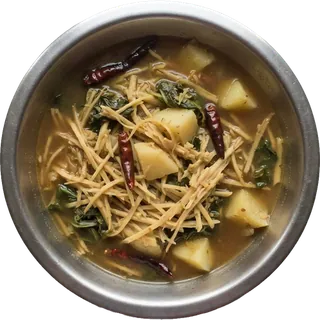
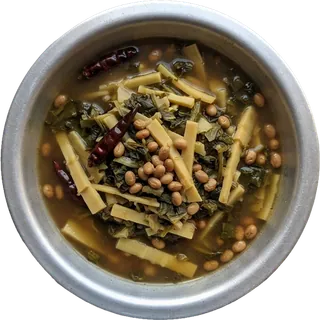
Nadru Monje
Lotus root rings, cut from stems grown in Srinagar's lakes, are dipped in a spiced rice-flour batter and fried on roadside stalls until the edges crisp, sold hot as a winter snack across the city.
How to order
भाई साहब, नादरू मोंजे दीजिए।
A customer can add ‘क्या इसमें घी या दही है?’ — asking whether ghee or curd has been used — since the fried rings are plain but some stalls finish them with a ghee smear or serve a curd-based chutney alongside.
History
Nadru monje is sold from handcarts and small stalls along Srinagar's streets and markets, particularly near Dal Lake and in the old city, where lotus root is grown in the shallow waters of Dal and Anchar lakes by families who cultivate the lake beds. Vendors slice the stem into rings, coat them in a batter of rice flour and ground spices, and fry them to order over a kerosene or wood fire, usually in the colder months when lotus root is in season and demand for hot fried snacks rises. The snack is eaten standing at the stall or carried home wrapped in paper.
The batter itself contains no animal ingredient: rice flour, water and spices such as chili powder, turmeric, fennel and ginger powder are fried in vegetable oil, making the standard roadside version naturally vegan. This is distinct from nadru yakhni, a Kashmiri Pandit dish made from the same lotus root but set in a yogurt-based gravy, which is a separate preparation under a different name. A diner should still check that the frying oil or pan has not been shared with a fish-stuffed nadru variant sold at some stalls, and ask whether a ghee smear or a side of curd chutney has been added at the table.
Where to get it
Nadru monje is sold from roadside carts and small stalls in Srinagar, especially around Dal Lake, Lal Chowk and the old city markets, most commonly in the colder months when lotus root is harvested and sold fresh.