Akhuni
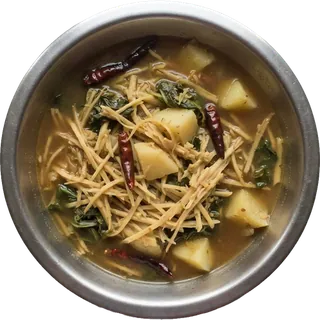
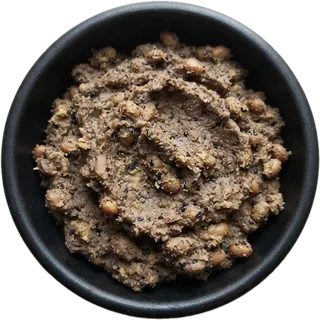
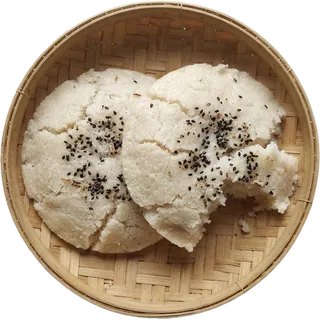
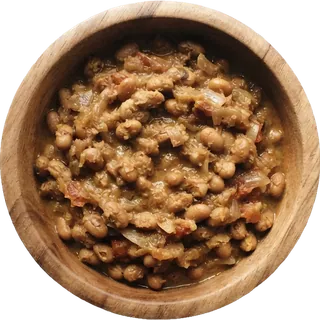
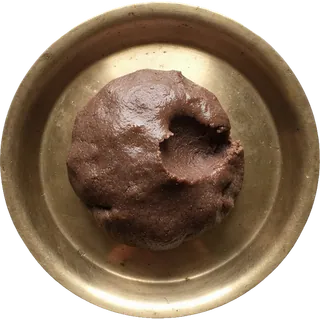
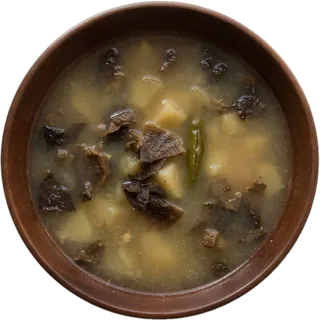
Akhuni is soybean, fermented in leaves until pungent, then pounded and pressed into flat cakes that Sumi Naga households in Kohima and across Nagaland use as a flavouring base, most often simmered into a stew with pork or dried meat and dried chillies.
How to order
Could you make the akhuni without pork or meat, please?
At a Kohima mess or stall, ask ‘Could you make the akhuni without pork or meat, please?’, since the fermented soybean cake itself carries no animal ingredient and the stew can be finished with vegetables or bamboo shoot alone.
History
Sumi Naga households in and around Kohima, Nagaland, ferment boiled soybeans wrapped in leaves for two to four days until the beans turn soft and strong-smelling, then pound them into cakes or balls that keep for months without refrigeration. The method is documented among Naga communities from at least the nineteenth century and remains a routine kitchen practice rather than a special occasion. Akhuni is sold dried or fresh in Kohima's markets and used across Naga cooking as a flavour base rather than eaten on its own, stirred into stews with vegetables, bamboo shoot, pork or dried meat, and chillies.
The fermented soybean cake itself contains no animal product, but the standard Naga preparation almost always cooks it with pork fat or dried meat, which carries the dish's smokiness, so a dish built around akhuni is not automatically plant-based. Mess kitchens and Kohima eateries will leave out the pork or dried meat on request and simmer the akhuni with vegetables, bamboo shoot, perilla seeds or chillies instead, since the cake supplies enough savour on its own. Diners who want a plant version should ask for it specifically rather than assume the stew served by default is meat-free.
Where to get it
Akhuni cakes are sold dried or fresh in Kohima's main markets and in Naga specialty stores in Dimapur, and the cooked stew is served in Naga messes and at stalls during the Hornbill Festival in December.