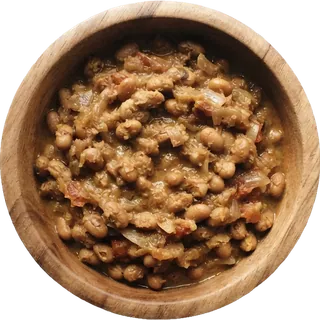
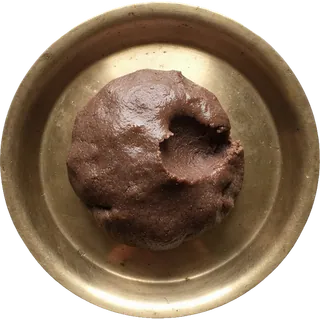
Bai
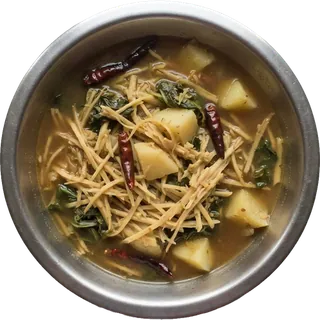
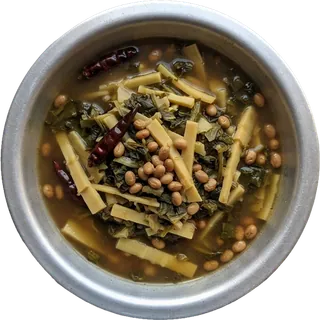
Bai is a one-pot preparation from Mizoram made by boiling local greens, beans and bamboo shoot with a pinch of soda, eaten as an everyday accompaniment to rice.
How to order
Could you make the bai without any pork fat, please?
Ask directly: ‘Could you make the bai without any pork fat, please?’ since sa-um is stirred in while the pot boils rather than added at the table, so it cannot be picked out afterward.
History
Bai is cooked in Mizo households across Mizoram, including Aizawl, as a routine accompaniment to boiled rice. The dish gathers whatever local greens, beans and bamboo shoot are in season, boiled together in a single pot with a small amount of soda to soften the vegetables quickly. It is documented in Mizo home cooking through the twentieth century and remains common in both household kitchens and small eateries serving Mizo food in Aizawl. Versions vary by season and by what is available in the local market, with mustard greens, pumpkin leaves, local beans and bamboo shoot among the common combinations.
The standard version of bai is flavoured with sa-um, pork fat that has been salted and left to ferment, added to the pot while the vegetables boil so that it melts through the dish rather than sitting on top. Without sa-um, bai is built from greens, beans, bamboo shoot, soda and water, with no other animal ingredient in the standard recipe. A diner who asks for bai without sa-um, or simply without pork fat, is ordinarily given a pot cooked with salt and chilli in its place; cooks in Aizawl handle this request routinely rather than treating it as unusual.
Where to get it
Bai is served in Mizo households throughout Aizawl and in small eateries and messes offering Mizo food in the city, and it appears in community kitchens during local festivals such as Chapchar Kut.