Shijia
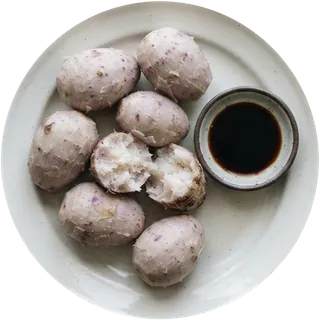
Shijia is the sugar apple and its hybrid the atemoya, grown across Taitung from Taimali north through Beinan and Donghe. The ripe fruit is pulled apart or cut open and the white segmented flesh spooned out around the black seeds.
How to order
老闆,釋迦怎麼賣?
Whole fruit needs no checking at all. The question only arises with the ice cream and blended drinks made from it, which usually contain milk or condensed milk; ask 「這個有加牛奶嗎?」, 'does this have milk in it'.
History
The sugar apple reached Taiwan with Dutch traders about four hundred years ago and was first planted around Tainan; it settled into Taitung roughly fifty years ago, as pineapple and citrus growing there declined. Taitung now holds well over four-fifths of the national planting area, around 2,500 hectares by the county farmers' association's count. Two fruits share the name. The round-scaled daimu sugar apple, strongest around Taimali, ripens in a summer-autumn crop from July and again in winter; the atemoya, a cross between sugar apple and cherimoya brought in during the 1960s and planted commercially from the 1990s, prefers the cooler valley terraces of Beinan and Donghe and comes in from December to April.
Shijia is fruit and nothing else: it is picked hard, left to soften at room temperature, then opened by hand or sliced, and eaten with a spoon, often after a spell in the fridge, which firms the flesh. No sugar, syrup or dairy is involved, and the sweetness is the fruit's own. The place an animal ingredient enters is the processed form rather than the fruit: shijia ice cream and the blended shijia drinks sold around the county are usually made with milk, milk powder or condensed milk. A diner who wants the fruit simply buys it whole from a grower's stall, where it arrives in a box.
Where to get it
Growers set up boxes at stalls around Taitung station through the season, roughly July to March, and roadside stands line the highway through Taimali and Beinan. The county and district farmers' associations sell graded fruit, with the daimu sugar apple from Taimali in late summer and autumn and the atemoya from Beinan and Donghe from December to April.