Tot
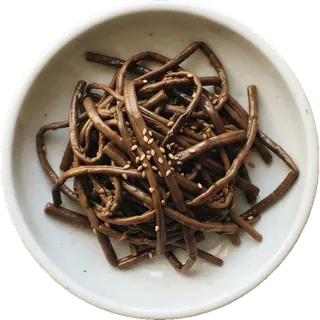
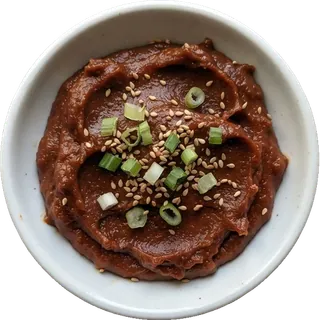
Cut from the rocks at low tide by Jeju's haenyeo divers through winter, the seaweed is blanched until it turns from brown to green, then mixed through warm rice or dressed with doenjang and sesame oil. It is eaten on Jeju from December to March, at home and at harbourside restaurants.
How to order
멸치랑 계란 빼고 주세요.
Tot bap and tot muchim are plant-based as usually made at home, but some restaurants stir dried anchovies into the rice while it cooks or set a fried egg on top; ask before ordering with “멸치랑 계란 빼고 주세요.” If the anchovies have already gone into the rice while it cooked, the kitchen may not be able to pull them back out, so asking before the pot goes on is more reliable than asking after it's served.
History
Tot (톳) is hijiki, the branching brown seaweed that grows on rocks along Jeju's coastline and is cut by hand at low tide, mostly by haenyeo, the island's women divers, through the winter months when the fronds are at their fullest. Once rinsed of sand, it is blanched briefly, which turns it from a dull brown to a deep green, then chopped and mixed into warm rice (tot bap) or dressed as a side dish (tot muchim). It is ordinary daily food on Jeju rather than a festival dish, sold in small bags at coastal markets in Hallim and Seongsan from December through March.
The base is plant throughout: seaweed, rice or doenjang, garlic, scallion and sesame. None of the three usual entry points for animal product quite applies — there is no kimchi paste here to carry jeotgal, and no soup built on myeolchi-yuksu. The exception is tot bap at some restaurants, where diced dried anchovies are stirred into the rice during cooking for extra savour, or a fried egg is set on top at serving. Both are additions, not part of the base, so the dish is already plant-based unless the kitchen adds one of the two.
Where to get it
Harbourside market restaurants and home kitchens around Jeju's coastal towns — Hallim, Aewol, Seongsan — where tot is sold fresh or dried from December through March; a bowl of tot bap at a market eatery runs about 8,000-10,000 KRW.