Yanchao Bale
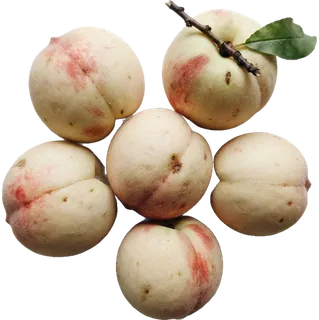
Crisp pearl guava grown in Yanchao in Kaohsiung, on soil washed down from the mudstone badlands and mud volcanoes of the eastern hills. It is eaten raw, skin and all, cut into wedges.
How to order
老闆,燕巢珍珠芭樂一斤多少?
Raw fruit raises no question; the dipping powder handed out with cut guava is sugar, salt, liquorice and dried plum, and if you would rather have the fruit plain, say 「不用梅粉,謝謝。」
History
Yanchao has more land under guava than any other district in Taiwan, on the order of 1,200 to 1,500 hectares, and accounts for roughly 43 per cent of Kaohsiung's crop and about a sixth of the national one. Its eastern hills are mudstone badlands where mud volcanoes push up mineral-rich slurry that rain carries down into the orchards, and growers and the district office both credit that soil for the particular sweet-sour edge of the fruit. Thai guava was planted here from the mid-1980s and was largely displaced around 1991 by the pearl variety, which now dominates. Pruning keeps fruit coming all year, but the winter crop from October to February is the one growers rate.
The fruit is washed, cut into wedges and eaten raw, often with the skin on and the seeds in, so nothing is added that could be animal-derived. At markets it is handed over with a twist of liquorice-and-plum powder for dipping, which is sugar, salt, liquorice and dried plum. The nickname milk guava, which attaches to the pearl variety in some markets, is explained by growers as a reference to a fermented milk liquid fertiliser applied to the trees rather than to anything in the fruit, and the fruit that reaches a stall is simply fruit. Nothing is brushed, waxed or sweetened before sale.
Where to get it
Roadside orchard stalls along the roads through Yanchao, the Yanchao District Farmers' Association on Zhongmin Road, and fruit markets across Kaohsiung; best from October to February, though fruit is picked year-round.