Aam Panna
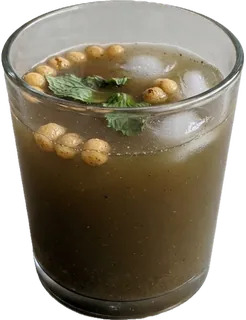
Aam panna is a tart-sweet Delhi summer drink made from fire-roasted or boiled green mangoes, pulped, thinned with water and seasoned with roasted cumin, black salt and mint. It is sold from steel buckets outside stations and in old Chandni Chowk juice shops, drunk quickly through the hot, dry loo winds of May and June.
How to order
सुनिए, एक गिलास आम पन्ना दे दीजिए, बर्फ़ के साथ।
Aam panna made the traditional Delhi way is naturally vegan, built from raw mango, sugar or jaggery, salt and roasted cumin with no dairy involved, though it is worth confirming the vendor has not stirred in milk or cream for a richer finish; you can simply ask ‘क्या इसमें दूध या मलाई डाली है?’. Request "kam meetha" if you want it less sweet and more tart.
History
Raw mango drinks have been recorded as part of the north Indian hot-season repertoire since at least the late nineteenth century, made in households and sold by street vendors as the weather turns dry before the monsoon. In Old Delhi, vendors roasted unripe mangoes directly over coals or buried them in hot ash, a technique that deepens the pulp's sweetness and gives it a faint smokiness before it is strained, sweetened and spiced. The drink was made to be sold fresh by the glass rather than bottled for storage, and it travelled with migrants into Delhi's markets and railway platforms, where it became a fixture of the pre-monsoon street trade.
The standard recipe is built entirely from plant and mineral ingredients: green mango pulp let down with water, sweetened with sugar or jaggery, and seasoned with black salt and roasted cumin, sometimes finished with mint. No oil, ghee, milk or curd goes into the pot at any stage of roasting, pulping or mixing. What a diner should still watch for is what stands beside it rather than in it: street carts often place the glass next to lassi or chaas, and some sweeten the rim with a pinch of extra sugar on request, so it is worth confirming that nothing from a neighbouring dairy urn has gone into the same jug or ladle.
Where to get it
Old Delhi's Chandni Chowk and the lanes around Jama Masjid are classic hunting grounds, along with juice and sherbet stalls near Delhi Gate and Daryaganj; seasonal carts also appear near markets like Lajpat Nagar and INA through the peak mango months of April to July.