Chole
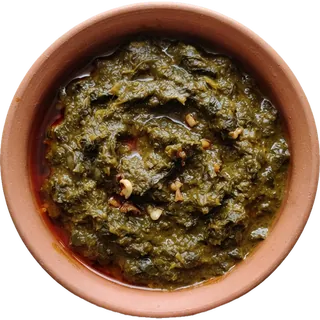
Chole is Punjab's chickpea stew — chana simmered dark with tea and anardana, sharpened with sour pomegranate seed, finished with ginger slivers and green chilli, eaten with kulcha or puri at any hour of the day.
How to order
ਜੀ, ਇੱਕ ਪਲੇਟ ਛੋਲੇ ਦੇ ਦਿਓ।
At a Punjabi dhaba the chole pot is usually just chickpeas simmered with onion, tomato and spices, so a plain plate with chopped onion, green chilli and lime is naturally plant-based; it is only fancier restaurant versions that stir in butter or cream for richness. To be sure, ask ‘ਕੀ ਇਸ ਵਿੱਚ ਘਿਓ ਜਾਂ ਮੱਖਣ ਪਾਇਆ ਹੈ?’ before you order.
History
Chole traces its lineage through Punjab's roadside dhabas and the chana-bhatura stalls of pre-Partition Lahore and Amritsar, where dried chickpeas were soaked overnight and boiled for hours over slow coal fires. Cooks found that a cloth pouch of black tea leaves, dropped into the simmering pot, gave the chickpeas their signature near-black colour without any artificial darkening agent, a method passed down through families rather than written. Anardana, dried wild pomegranate seed, supplied the tartness that balances the dish's heat, while a blistering tempering of ginger, green chilli and whole spices sealed the character that spread with Punjabi migration across the subcontinent and the world.
The pot itself holds only chickpeas, tea, anardana, ginger, green chilli, onion, tomato and dry masala, cooked in oil or groundnut oil; the darkness comes from tea, not from meat stock, and body comes from the chickpeas themselves. Where a diner still needs to pay attention is in restaurant kitchens outside the dhaba tradition, where a spoon of butter or a swirl of cream is sometimes stirred in at the pass to round off the gravy, and where a side of curd is often served alongside as a separate order rather than mixed into the pot. A plate ordered plain, dhaba-style, avoids both, but it is worth a glance at the menu or a quick word with the server in an upscale setting.
Where to get it
Roadside dhabas and chana-bhatura stalls across Punjab — Amritsar, Ludhiana, Jalandhar and Chandigarh especially — ladle it from huge blackened pots onto steel plates with onion, chilli and bread from morning till night.