አምባሻ / ሕምባሻ (Ambasha)
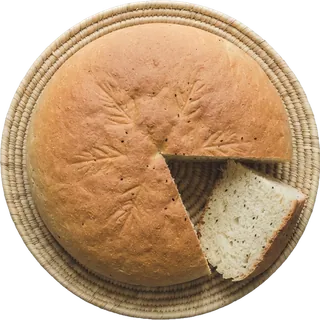
Ambasha is a round wheat loaf scored into a wheel of spokes before baking, the dough lifted with yeast and seasoned with black cumin and fenugreek. Bakers in Amhara towns and in Adwa, Tigray, bake it in flat discs some 25 to 30 centimetres across, sold whole at bakeries and broken apart by hand at weddings, baptisms and holiday meals.
How to order
እባክዎ አንድ አምባሻ የጾም ይሁን ይስጡኝ።
The sale runs in Amharic in Amhara towns and in Tigrinya in Adwa, though Amharic is understood at most bakery counters. What has to be settled is whether the loaf carries butter, milk or egg, since those are worked into the dough before baking and not brushed on after; asking for the “ye'tsom” loaf settles it in one word where a bakery keeps both versions on the shelf. On an ordinary weekday a bakery may have only the enriched loaf out, baked that morning, in which case no question at the counter changes what is already in it.
History
The bread carries two names for one object: አምባሻ, ambasha, in Amharic, and ሕምባሻ, himbasha, in Tigrinya, both naming the same scored wheat loaf baked across the northern highlands, from towns in Amhara region to Adwa in Tigray. Household cooks and town bakeries mix wheat flour with yeast, water, sugar, ground black cumin (tikur azmud) and fenugreek (abish), knead the dough, shape it into a flat disc, and score the surface into a spoked wheel before it goes into a wood-fired oven or a household stove. It is baked ahead of weddings, baptisms, and the major Orthodox Tewahedo holidays — Meskel, Timkat, Fasika — and sold year-round at bakeries in Bahir Dar, Gondar, Adwa, and Mekelle.
The plain loaf is entirely plant: wheat flour, water, yeast, sugar and spice, with no animal product touching the dough at any point. Richer versions carry butter, milk or egg, worked into the dough during mixing, before it is shaped and scored — not added afterward. Bakeries supplying the Wednesday and Friday fast and the long Orthodox Tewahedo fasts make the plain version in oil instead of butter; on ordinary days the same ovens may turn out the enriched loaf for a wedding or a holiday table. Since the egg, milk or butter is already in the dough before baking, asking at the counter after the loaves come out does not change them; the question has to be settled with the baker before mixing, or by choosing a loaf already labelled fasting, ye'tsom.
Where to get it
Bakeries and household kitchens across Amhara region — Bahir Dar, Gondar, Debre Birhan — and in Adwa, Tigray, sell it whole or by the piece, with enriched loaves most common around Meskel in September, Timkat in January and Fasika, the Orthodox Easter, for roughly 30 to 80 birr a loaf depending on size and richness.