Angu
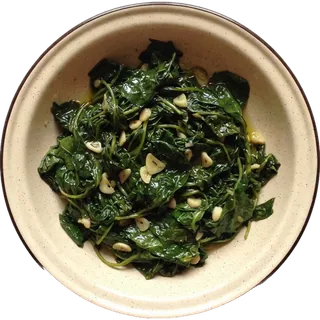
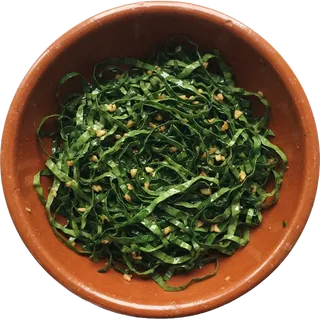
Fine maize meal (fubá) stirred by hand into boiling salted water until it thickens and pulls cleanly from the sides of the pan, then turned out as a dense, smooth mound. Sold in Minas Gerais at lunch counters and market stalls as the starch base of a plate, set under a stew or beside beans and greens.
How to order
Pode ser um angu simples, sem caldo de galinha no preparo, por favor?
The sale runs in Portuguese at lunch counters and market cantinas, and it helps to ask before the pot is started, since once the water is seasoned with “tempero pronto” there is no fixing it afterward. Settle also what is going over the angu, asking for it “só com feijão e couve”, with beans and greens only, if a meat-based stew is what is on offer that day.
History
Angu is Portuguese, the word traced to a Bantu root, likely Kimbundu, carried into Brazilian Portuguese through the speech of enslaved people brought to Minas Gerais to work the colonial mines and farms. It is made across the state, from Belo Horizonte's market cantinas to interior towns such as São João del-Rei and Tiradentes, where cooks at home and at lunch counters stir fubá into boiling salted water over low heat, working it with a wooden spoon until it thickens and pulls from the pan. It is turned out onto a plate or board and sold at midday as the base of a prato feito, under a stew or beside beans and couve.
What goes into the maize itself is plant only: fubá, water and salt, worked until smooth. Animal product enters in two places. One is visible: the stew, beans or greens ladled over the angu at serving, which in Minas Gerais commonly starts with bacon, toucinho, charque or carne de sol in the pan. The other is not: some cooks drop a chicken stock cube into the water before the fubá goes in, to deepen the flavor of the maize itself, and once that water has been seasoned and the angu made, there is nothing to undo at the table. What has to be settled, then, is both what is being ladled on top and whether the cooking water itself carried a stock cube.
Where to get it
Lunch counters and market cantinas across Minas Gerais, including the Mercado Central in Belo Horizonte and small eateries in São João del-Rei and Tiradentes, serve it at midday year-round, as part of a plate for roughly R$10 to R$18.