Ora-pro-nóbis
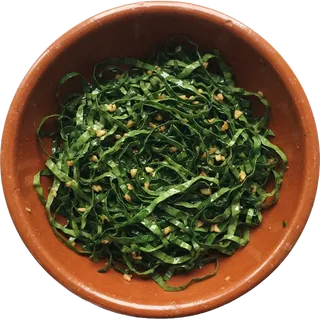
Ora-pro-nóbis is the leaf of Pereskia aculeata, a thorny, climbing cactus trained up house walls and fences in Sabará and other towns of Minas Gerais. The leaves are stripped from the spined stem, rinsed, and sautéed with garlic and oil until they soften into a dense, slightly viscous green. It is sold by weight at feiras and served as a side dish in local restaurants.
How to order
Ora-pro-nóbis sem frango e sem caldo de galinha, por favor, pode ser só no alho e óleo?
The transaction runs in Portuguese, and the phrase that covers it is “sem frango e sem caldo de galinha,” without chicken and without chicken stock, since both can go into the pan without showing on the plate. If a restaurant's pot of ora-pro-nóbis has already simmered with chicken, asking at the table changes nothing, so it helps to settle it before ordering, or before the leaves go into the pan at a stall.
History
Ora-pro-nóbis takes its name from a Latin phrase in Catholic litany, “pray for us.” The plant is Pereskia aculeata, a thorny, climbing cactus grown up house walls and fences in Sabará and other towns of Minas Gerais, picked as a leaf vegetable by households and small growers. Cooks strip the young leaves from the spined stem, rinse them, and sauté them with garlic in oil until they soften into a dense, mucilaginous green, often finished with onion or tomato. Feiras and municipal markets in Sabará sell it bundled by weight, and restaurants serve it as a side dish with rice, beans and pork. Its high protein content has given it the nickname carne de pobre, describing the leaf's nutrition rather than any person's circumstance.
The leaf, garlic and frying oil are plant throughout, and the stewing itself needs no animal fat to turn the leaves tender. Animal product enters when the cook stews the ora-pro-nóbis together with chicken, a decision made at the start of the pot, or when a cube of chicken stock, caldo de galinha, is dropped into the sauté, which is common enough in restaurant kitchens to be easy to miss. Buying it therefore means asking whether the leaves were cooked only with garlic and oil, or with meat or stock from the start. Where a restaurant's pot has already been simmering with chicken for an hour, asking at the table changes nothing; the plant-only version has to be ordered, or cooked, separately from the start.
Where to get it
Feiras and municipal markets in Sabará and nearby towns of Minas Gerais sell the leaves bundled by weight year-round, with the most tender growth after rains between October and March; restaurants in the region list it as a side dish for R$10-15, and loose leaves at market run about R$15-25 per kilo.