በሶ (Besso)
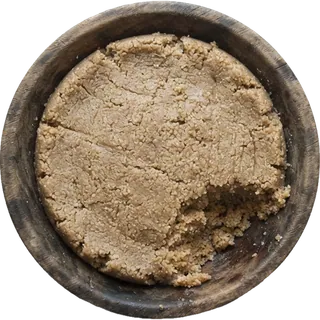
Besso is roasted barley, ground to a fine, pale flour, then either stirred into cold water with salt as a drink or worked with a little water into a stiff ball carried as travelling food. Farmers across Oromia and the southwest roast and mill their own barley at home; market vendors sell the flour loose by the cup or already shaped into balls.
How to order
እባክዎ አንድ በሶ ያለ ቅቤ ይስጡኝ።
The only thing to settle is whether butter has already gone into the batch, since sugar, butter or honey are worked into the dry mix before it is shaped into a ball, not added afterward. The sale runs in Amharic in most market towns and in Afaan Oromoo in rural Oromia markets. Asking “yale kibe,” without butter, catches flour that has not yet been mixed, but it has no effect on a vendor's batch already worked with butter that morning, in which case plain barley flour has to be bought separately and mixed by hand.
History
Besso (በሶ in Amharic script, the same word in Afaan Oromoo) is roasted and milled barley, made across the highlands of Oromia and in Sidama and Wolaita areas further south. Households roast whole barley grains on a flat metal pan until they colour and crack, then carry the grain to a water mill or a motorized town mill to be ground into a fine flour. The flour is mixed with cold water and salt, either thin enough to drink from a cup or worked stiffer and pressed into a ball small enough to fit in a pocket or saddlebag. Roasted barley flour keeps for weeks without spoiling, which is why herders and travellers carry it rather than cooked food. Market towns sell it loose by the cup, by the kilogram, or already shaped and wrapped for the road.
In its common form besso is barley, water and salt, nothing more, and no animal product enters the pot at any stage. Some households work in sugar, butter or honey while mixing the flour, before it is shaped into a ball, so these are a kitchen-stage addition rather than something stirred in at the table afterward. Because the plain version already contains no animal product, it fits the Orthodox Tewahedo fast on Wednesdays, Fridays and through the long fasts without any change in method; households that routinely add butter switch to oil, or leave it out, on those days. What has to be settled when buying is whether a vendor's batch already has butter worked into it, since asking afterward will not take it back out once the dough is mixed and shaped.
Where to get it
Market towns across Oromia such as Ambo, Nekemte and Shashamene sell it loose by the cup or shaped into balls, with the same flour also turning up in Addis Ababa markets; barley is harvested from around November, but roasted flour keeps and is sold year-round for roughly 20-40 ETB a cup or about 150 ETB a kilogram.