ቂጣ (Kitcha)
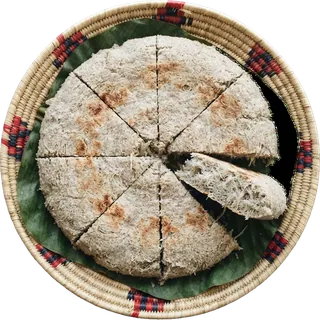
Kitcha is a round of unleavened wheat dough, rolled thin and baked briefly on a flat clay griddle over direct heat, turned once until it dries and blisters. Cooks tear it apart hot and serve it with tea, or break it up the next day as the base for firfir. Sold at tea houses and market stalls across the Oromia highlands and in Addis Ababa.
How to order
ቂጣ ይስጡኝ እባክዎ፣ ያለ ቅቤ።
The sale runs in Amharic in Oromia towns and in Addis Ababa, and asking “yale kibe,” without butter, covers it, since butter is the only thing brushed on after the bread leaves the griddle. On Wednesdays, Fridays and during the longer Orthodox Tewahedo fasts, the question largely settles itself, as vendors serving fasting customers bake in oil or with no fat at all. Outside those days, plain kitcha is available on request at most tea houses and stalls.
History
Kitcha (ቂጣ in Amharic; the same word is used in Afaan Oromoo) is an unleavened flatbread made from wheat flour, water and salt, worked into a stiff dough and rolled thin before baking on a mitad, a flat clay griddle set over an open fire or charcoal. It is common across the wheat-growing districts of Oromia, from Ambo and Welenchiti to kitchens and tea houses in Addis Ababa. Households bake it for breakfast or an afternoon break, tearing the round apart while it is still hot. Market stalls and small eateries sell it alongside tea, and cooks fold leftover pieces into firfir the next morning.
The dough itself is entirely plant: wheat flour, water and salt, worked and baked with no fat or dairy mixed in. Animal product enters only after the bread leaves the pan, when some bakers brush the hot round with niter kibbeh, spiced clarified butter, to soften it; others use plain oil or add nothing. On Wednesdays and Fridays and through the Orthodox Tewahedo fasting periods, bakeries and households serving fasting customers bake with oil or no fat at all, so a kitcha bought on those days is reliably plain. On other days, the only thing to settle is whether butter goes on before the bread is handed over, since it is brushed on right at the griddle and can be left off on request.
Where to get it
Tea houses, bakeries and market stalls across Oromia, including Ambo, Adama and Welenchiti, and tea shops throughout Addis Ababa, sell it daily year-round for roughly 10 to 20 ETB a round.