ቆጮ (Kocho)
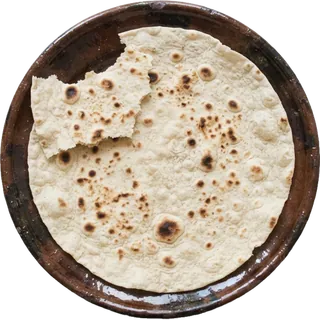
Kocho is a dense, sour flatbread made from the pulp of the enset plant, scraped from its pseudostem and corm, packed into a leaf-lined pit and left to ferment for months before being kneaded and baked flat on a clay griddle. It is sold whole or in wedges at markets across the southern highlands, in Hosa’ina, Hawassa and Arba Minch.
How to order
እባክዎ ቆጮውን ብቻውን ይስጡኝ።
The sale runs in Amharic at markets in Hosa’ina, Hawassa and Arba Minch, though Guragigna, Sidaamu Afoo and Hadiyyisa are also heard locally. Saying the kocho should come “ብቻውን” (bichawn), on its own, covers both ayib and kitfo in one word, since vendors serve all three from the same stall or table. On a Wednesday, a Friday, or during one of the longer fasts, asking is not even necessary at an Orthodox household or restaurant kitchen, since the dairy and meat are already off the menu that day.
History
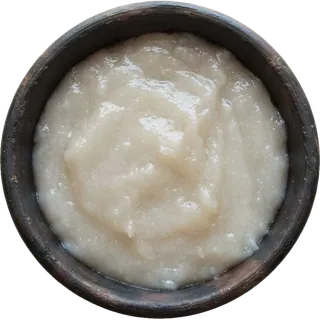
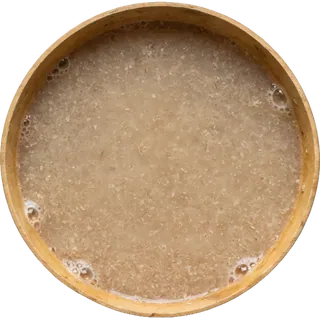
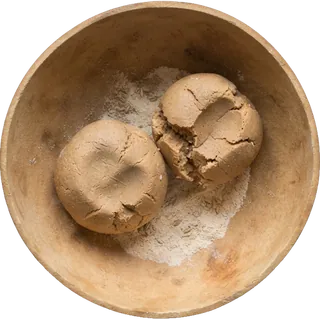
Kocho is the Guragigna name for a bread fermented from enset (Ensete ventricosum), the false banana of Ethiopia's southern highlands; the same bread is called waasa in Sidaamu Afoo and wesa in Hadiyyisa. Gurage, Hadiya, Sidama and Gamo households grow enset around Hosa’ina, Hawassa and Arba Minch, where it is the staple crop. Women scrape the pulp from the pseudostem and corm, pack it into a pit lined with enset leaves, and leave it to ferment for months, sometimes years. The fermented pulp is kneaded with water and baked flat on a clay griddle, the mitad, into a round, dense loaf. It is sold whole or cut into wedges at local markets and kept in most households as a standing starch.
Enset pulp, water and time make the bread itself: the pit ferments without any addition, so kocho contains no animal product at any stage of its own preparation. It is usually set on the same plate as ayib, a fresh cheese, or kitfo, raw minced meat seasoned with spiced butter, both added after the bread is baked rather than mixed into it. What has to be settled at the point of sale or service is whether those accompaniments come with it or are left off. During the Orthodox Tewahedo fast, on Wednesdays, Fridays and through the longer fasting periods, kocho needs no change since it is already plant-only; it is the ayib and kitfo that disappear from the plate, replaced where anything is added at all by shiro or cooked vegetables.
Where to get it
Local markets in Hosa’ina, Hawassa and Arba Minch sell kocho year-round, since the fermented pulp keeps in its pit for months; a whole loaf or a stack of wedges runs about 15 to 30 birr.