ዳታ (Datta)
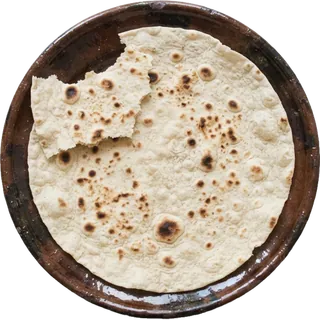
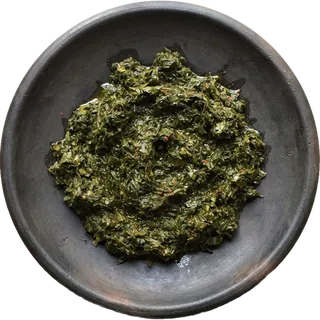
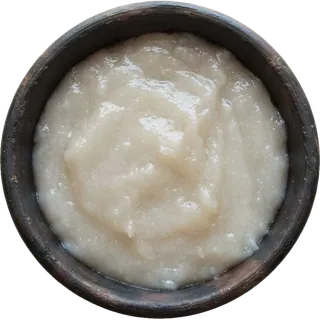
Green chillies pounded in a stone mortar with garlic, cardamom and lemon into a coarse paste, finished with salt. Sold in small mounds at local markets across the enset-growing zones of southern Ethiopia, it is set beside kocho and wheat bread at the table.
How to order
እባክዎ ትንሽ ዳታ ይስጡኝ፣ አመሰግናለሁ።
Datta needs no qualifier of its own, since chilli, garlic, cardamom and lemon are pounded without butter or cheese at any point, and the relish does not change for the Wednesday and Friday fast. The sale runs in Amharic at larger markets and in Kembatiisata, Hadiyyisa or Guragigna at smaller local stalls, where a buyer can simply ask for “ትንሽ ዳታ” (a little datta) by weight or by mound. The only thing worth specifying is at the kocho beside it, if the diner wants the whole plate without ayib or niter kibbeh added at the table.
History
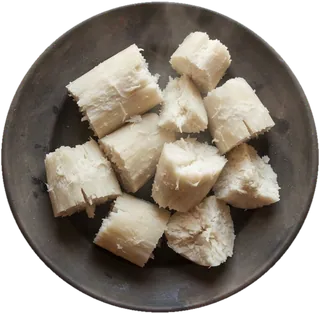
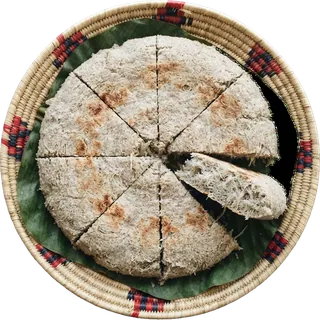
Datta is the name used in Kembata, Hadiya and Gurage kitchens of the Southern Nations, Nationalities and Peoples' Region, where enset, not grain, is the staple crop. Cooks, usually women, pound fresh green chillies with garlic cloves and the seeds of korarima (Ethiopian cardamom) in a stone mortar, working in salt and finishing with a squeeze of lemon juice once the paste turns coarse and uniform. It is made fresh for the day's meal in towns such as Durame, Hosaena and Wolkite, and sold in small mounds at local markets alongside vendors selling kocho, the pressed and fermented pulp of the enset plant. It is eaten as a side relish, scooped with pieces of kocho or wheat bread.
Everything in datta is plant: chilli, garlic, cardamom, lemon and salt, pounded dry with no oil, butter or cheese worked in at any stage. No animal product enters the relish before or after it leaves the mortar, so there is nothing to specify when ordering it on its own, and it carries through the Wednesday and Friday fasting days of Orthodox Tewahedo households without any change in method. The one place animal product can appear on the same plate is the kocho beside it, which some vendors dress with crumbled ayib or a pour of niter kibbeh at the table; the datta itself stays unaffected, but a diner who wants the whole plate free of dairy should say so when the kocho is served.
Where to get it
Local markets in the enset-growing zones of the Southern Nations, Nationalities and Peoples' Region — Durame, Hosaena, Wolkite, Sodo, Arba Minch — sell it in small mounds beside kocho stalls, year-round, for roughly 10 to 20 birr a portion.