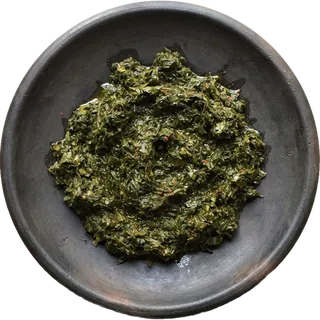
ሻመታ (Shameta)
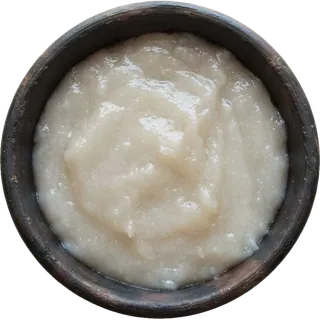
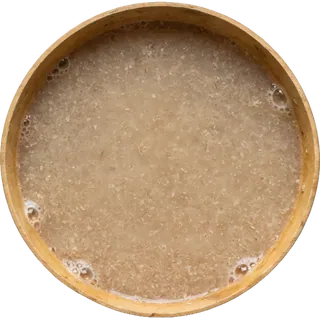
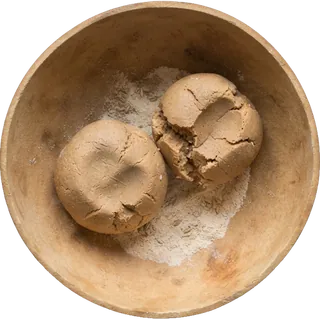
Shameta is a fermented enset-and-barley preparation: ground enset starch and roasted barley flour mixed with water and spice, left to sour over several days into a thick, tart drink-food. Gurage households make it for women in the weeks after childbirth; it is spooned from a bowl rather than poured, and more often prepared at home than bought at a market stall.
How to order
እባክዎ የጾም ሻመታ ይስጡኝ፣ አመሰግናለሁ።
Where shameta is sold at all, the sale runs in Amharic or in Guragigna at Gurage Zone markets. Asking for the “የጾም” (fasting) batch signals oil rather than butter, but since the pot was mixed and left to sour days earlier, that batch either exists already or it does not — the question has to be settled before buying, not after the bowl is poured. Where only one pot is on offer, it is worth asking outright, “በቅቤ ነው ወይስ በዘይት?” (“is it with butter or with oil?”), since the two are never mixed in the same batch.
History
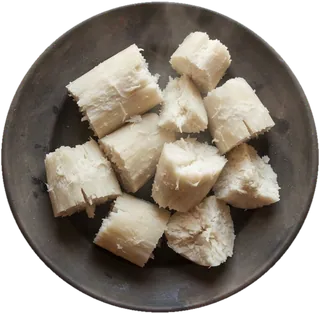
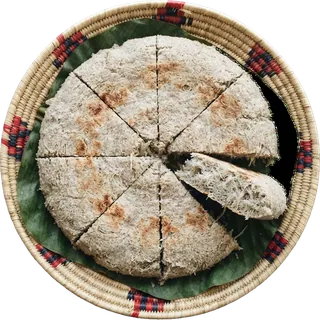
Shameta is the Guragigna name for a fermented enset-and-barley preparation made across the Gurage Zone of central Ethiopia, in towns such as Wolkite, Butajira and Imdibir. Enset is harvested, scraped and the pulp left to ferment underground for months to form bulla or kocho starch; for shameta this starch is mixed with roasted barley flour, water, ginger and other spices and left in a covered pot for several days until it sours into a thick, drinkable paste. The work, from scraping the enset to grinding the barley, falls to women, and shameta itself is made by and for women, prepared in the household to feed a mother in the weeks following childbirth rather than sold as a general market food.
Everything that ferments is plant: enset starch, barley flour, water and spice. Niter kibbeh, spiced clarified butter, is commonly stirred in while the mixture is mixed and left to sour, so the animal product enters during preparation, days before the dish is eaten, not at the table. In Orthodox Tewahedo Gurage households this batch is made with oil instead of butter on Wednesdays, Fridays and through the long fasts; in Muslim Gurage households the choice of butter or oil has nothing to do with a fast and is simply a household habit. Because the pot is started and left to sour well before anyone eats from it, asking at the moment of serving cannot change what already went in; what has to be settled is which batch, oil-made or butter-made, is on offer that day.
Where to get it
Mostly prepared at home in Gurage Zone towns such as Wolkite, Butajira, Imdibir and Endeber, for new mothers in the weeks after delivery; a few market cooks keep a pot for sale, at roughly 15-30 ETB a bowl, with no particular season since enset is harvested year-round.