የጎመን ክትፎ (Ye'gomen Kitfo)
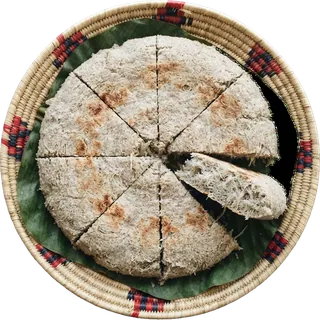
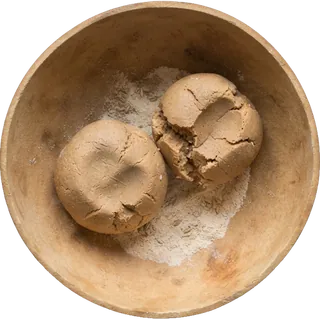
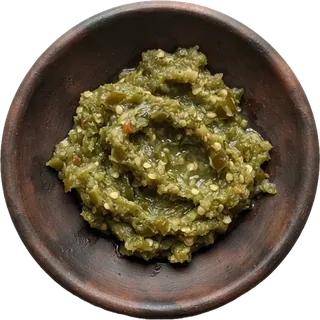
Collard greens boiled until tender, then chopped very fine on a wooden board and worked with spiced fat and chilli until the mass holds together, finished with a dusting of fresh cheese. Made in Gurage households of south-central Ethiopia and sold at local eating houses, it is spooned into a mound beside kocho, the pressed enset bread.
How to order
እባክዎ የጾም ይሁን፣ ያለ አይብ፣ አንድ የጎመን ክትፎ ይስጡኝ።
The sale runs in Amharic in Gurage Zone towns, though Guragigna is heard between cooks at home. Asking for “ye’tsom yihun” settles the cooking fat, since it tells the cook to use oil rather than niter kibbeh, and adding “yale ayib” leaves off the cheese. Once the greens are already chopped and bound with butter and cheese, as happens outside fasting days, nothing can be removed afterward, so the request has to reach the cook before that step.
History
Ye'gomen kitfo takes its name from gomen, collard greens, and kitfo, the fine hand-chopping that recalls the minced-meat dish of the same name. It is made across the Gurage Zone of south-central Ethiopia, in towns such as Wolkite, Butajira and Endibir. Cooks boil the collard greens, lift them onto a wooden board, and chop them by hand until the leaf breaks down into a paste, work usually done by women in the household kitchen. The chopped greens are then worked with niter kibbeh and berbere and topped with crumbled ayib. It is eaten at home and bought at local eating houses, always set beside kocho.
The greens, chilli and spice in gomen kitfo are plant. Animal product enters twice, both during cooking rather than at the table: niter kibbeh, clarified butter cooked with spices, is worked through the chopped leaf until it binds, and crumbled ayib is mixed in or scattered over the top before the plate leaves the kitchen. Because both are folded into the mass rather than added afterward, nothing can be picked out once it is served, so the version has to be settled before the chopping starts. On Wednesdays, Fridays and through the long fasts, Orthodox Christian households in the Gurage Zone cook it in oil instead of butter and leave off the cheese, and asking for that fasting version at those times is the reliable way to get a plant-only plate.
Where to get it
Local eating houses and market stalls in Wolkite, Butajira and Endibir, in the Gurage Zone of south-central Ethiopia, sell it year-round for roughly 40 to 70 birr a plate, usually plated with kocho.