Boerpampoen
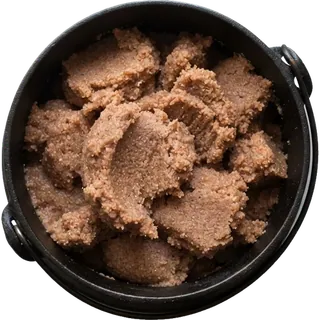
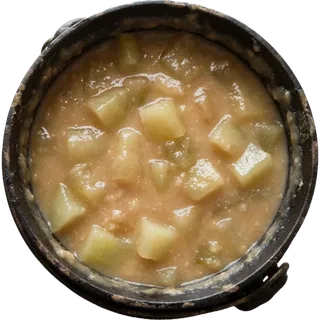
A flat white farm pumpkin, peeled and cubed, is stewed down with cinnamon and sugar until it collapses into a soft, spoonable mash. Free State and North West farm kitchens serve it on Sunday tables, alongside the roast, not after it.
How to order
Boerpampoen sonder botter, asseblief.
At a padstal or farm kitchen the cook usually only needs to know whether you take it with or without butter; say “Boerpampoen sonder botter, asseblief” to rule it out, though a number of roadside restaurants in these provinces run their counter in English as well.
History
Boerpampoen, Afrikaans for farmer's pumpkin, is the flat white pumpkin variety grown on grain and cattle farms across the Free State and North West, cooked down into a sweet mash eaten as a vegetable with the Sunday roast or set aside as a pudding. The pumpkin itself, ithanga in isiZulu and isiXhosa, reached the Cape from the Americas with Dutch trade, and the practice of stewing it sweet with cinnamon and sugar was built by enslaved cooks at the Cape, using spice brought in on the same Dutch East India Company ships that brought the enslaved people themselves; farmers carried the dish inland as they moved onto the interior grasslands.
Pumpkin, sugar and cinnamon are plant from the start, and the dish needs nothing more to come together in the pot. Butter is the one addition close to standard, stirred into the pumpkin partway through the stew to round out the sauce before it collapses into mash; that happens in the cooking, not added at the table, so the question is whether the cook used butter, oil or nothing at all, and that has to be settled before the pumpkin goes into the pot or while it's still on the stove.
Where to get it
Padstals and farm kitchens along the N1 and N12 through the Free State and North West, most often on the Sunday carvery table alongside pap and roast meat. Pumpkin is in from autumn through winter, and a scoop costs little more than any other side, R15 to R25 at a roadside stop.