Cheongyang-gochu
A short, slender green chilli bred to carry far more heat than Korea's standard hot pepper, eaten raw with a dab of ssamjang or sliced straight into stews and noodle broths. Home cooks and restaurant kitchens across the country keep a few in a side dish at nearly every meal.
How to order
청양고추 한 봉지 주세요.
Ask before ordering whether the stew is built on myeolchi-yuksu, the dried anchovy and kelp stock most kitchens start before anything else goes in the pot: “청양고추 한 봉지 주세요.” Few restaurants keep a separate kelp-only stock on hand, so this often means waiting for a new pot rather than a quick substitution; raw chilli with ssamjang carries no such risk and needs no asking.
History
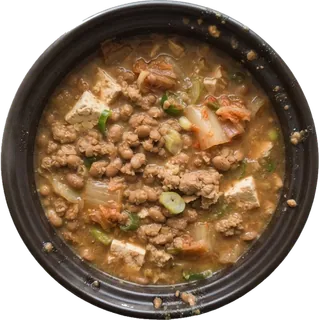
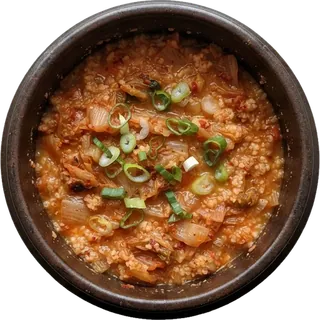
Cheongyang-gochu (청양고추) was bred in the early 1980s by a South Korean seed company that crossed local chilli varieties with hotter imported stock, aiming for a pepper with far more capsaicin than Korea's everyday green chilli. It takes its name from Cheongyang county in South Chungcheong Province, where early trial plots were grown. Within a decade it had displaced the milder pepper on most tables, now sliced into kimchi-jjigae and doenjang-jjigae for heat, or served whole and raw beside a bowl of ssamjang at nearly every Korean meal, from home kitchens to roadside restaurants.
The chilli itself is plant only, nothing added before or after it is picked. Eaten raw with ssamjang, it stays naturally vegan: the dip is a blend of doenjang and gochujang, both fermented soybean pastes, with garlic and sesame oil, and only rarely gets a splash of fish sauce. Sliced into a stew such as kimchi-jjigae or doenjang-jjigae, the pepper is still plant-based itself, but the broth beneath it is usually built on myeolchi-yuksu, a stock of dried anchovy and kelp simmered before the vegetables go in, so a plant-based bowl depends on whether the kitchen swaps in a kelp-only stock instead.
Where to get it
Side-dish baskets at barbecue restaurants and home-style diners nationwide keep a bowl of raw cheongyang-gochu with ssamjang on every table at no extra charge. The chillies themselves are sold by the kilo at any produce market or Chungcheongnam-do farm stand, running roughly 8,000-12,000 won a kilo depending on season, with the heaviest crop from June through September.