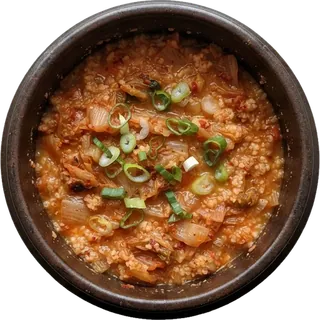
Cheonggukjang
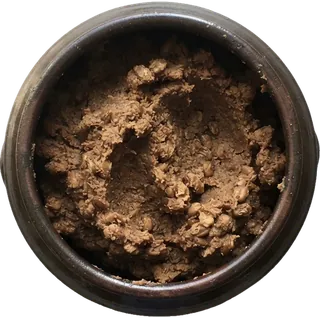
Soybeans ferment fast — two or three days in a warm room, not the months doenjang takes — until they pull into strings when lifted and the smell fills the house. The resulting paste is boiled into a stew, eaten through winter in the Chungcheong provinces, and argued over at the family table.
How to order
돼지고기랑 멸치 육수 빼고 해주세요.
Ask with “돼지고기랑 멸치 육수 빼고 해주세요,” but say so before the pot starts, since most kitchens make one batch of anchovy-kelp stock for the whole day's orders and cannot pull it back out once it is on the stove. The kimchi served on the side is a separate problem — it is almost never jeotgal-free, so a bowl that is otherwise plant-based will usually still arrive with kimchi made with salted shrimp or fish unless the kitchen keeps a batch without it, which few do.
History
Cheonggukjang (청국장) is made by fermenting boiled soybeans for two or three days, not the months a block of meju needs, traditionally wrapped in straw and set near a warm ondol floor so bacteria from the straw take hold fast; the beans turn sticky and pull into threads when stirred, and the smell is strong enough to clear a room. It is a winter dish of the Chungcheong provinces, cooked once the autumn soybean harvest is in, and its speed mattered more after the Korean War, when households rebuilding from shortage could not spare the months a slow paste takes.
The ferment itself is plant only: soybeans, water, straw bacteria. What follows is not. Cheonggukjang is eaten almost always as jjigae, boiled with kimchi and pork belly fried in first, in a stock built from dried anchovy and kelp (myeolchi-yuksu), and the kimchi carries jeotgal, salted fermented shrimp or fish, worked into its paste months earlier. All three enter during cooking: the pork at the start of the pot, the stock as its base liquid, the jeotgal already inside the kimchi before it reaches the stew. A plant-based bowl needs a kitchen willing to build a separate pot, with kelp stock instead of anchovy, jeotgal-free kimchi, and no pork.
Where to get it
Farmhouse restaurants (시골 식당) and cheonggukjang specialists in Chungcheongbuk-do and Chungcheongnam-do, around Cheongju and the farm towns nearby, serve it as a set lunch through the cold months, usually November to March, for about 9,000-12,000 won a bowl.