Doenjang
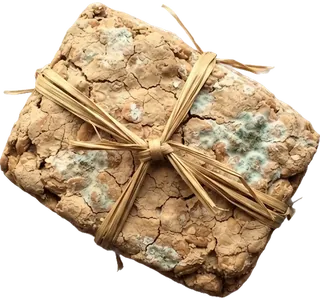
Boiled soybeans are mashed, shaped into blocks and dried, then steeped in brine in earthenware jars; the liquid drawn off becomes soy sauce, and the solids left behind age on into this dense, salted paste. Most Korean households keep a jar on hand, and rural kitchens across Chungcheong and Gyeongsang still make it each winter.
How to order
된장찌개 멸치 육수나 고기 빼고 채수로 해주세요.
The anchovy-and-kelp stock or pork goes into the pot before the tofu and vegetables are even added, so ask before ordering, not after the bowl arrives: “된장찌개 멸치 육수나 고기 빼고 채수로 해주세요.” Some small kitchens keep only the one pot of stock going all day and have no separate vegetable stock on hand, so the plain version may simply not be something they can make.
History
Doenjang (된장) is made each winter on the jangdokdae, the raised platform of earthenware jars kept behind a Korean house. Soybeans are boiled, mashed and pressed into blocks called meju, dried and fermented through autumn, then steeped in brine through the cold months around Seollal. The brine drawn off becomes ganjang, soy sauce; the soybean solids left behind are mashed again, packed back into the jars, and aged for months or years, darkening and intensifying. Rural households across Chungcheong and Gyeongsang still make their own this way, passed down through generations of women, while most doenjang sold today is made by the faster, cultured-mould method introduced under Japanese colonial rule.
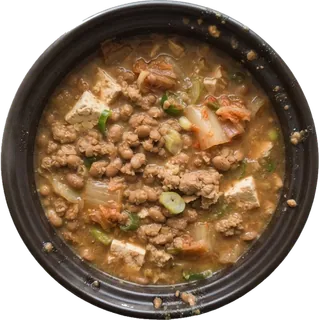
The paste itself holds nothing but soybean, salt and water, and ferments without any animal input. The jjigae it is usually cooked into is a different matter: most restaurant and home versions build the broth on myeolchi-yuksu, a stock of dried anchovy and kelp, or add diced pork alongside the tofu and vegetables, and either goes in at the start of cooking, well before the bowl reaches the table. A version made on a plain kelp or vegetable stock, with no fish or pork, has to be requested before the pot goes on, since neither can be picked out once the stew is done.
Where to get it
Home kitchens and traditional jang-making villages across the Chungcheong provinces and North Gyeongsang sell aged doenjang by the jar at market, while doenjang-jjigae itself is a lunch-counter standard nationwide; a bowl with rice runs KRW 8,000-10,000 at an ordinary counter, more at a hanjeongsik table.