Chokha
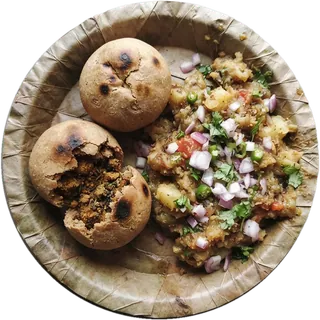
Aubergine, tomato and potato are roasted in embers until their skins blacken, then peeled and mashed together with mustard oil, raw garlic and green chilli. The result is smoky, sharp and earthy, eaten across Bihar alongside litti, rice or roti.
How to order
एक प्लेट चोखा दीजिए।
Chokha is nearly always made with mustard oil alone, but at some dhabas a cook finishes it with a spoon of ghee for richness, so it is worth asking ‘इसमें घी डाला है क्या?’ before ordering.
History
In Bhojpuri-speaking households across Bihar, chokha is made by roasting aubergine, tomato and potato directly in the embers of a chulha until the skins char and the flesh softens. The vegetables are peeled, mashed by hand on a plate or in a bowl, and mixed with mustard oil, raw garlic and green chilli, sometimes with chopped onion and coriander leaves. It is documented as the standard accompaniment to litti, the roasted wheat-and-sattu ball, in Patna, Gaya, Bhojpur and the Bhojpuri-speaking districts of eastern Uttar Pradesh, and is also eaten with plain rice or roti as an everyday meal.
Chokha contains no dairy or other animal product; the only fat used is mustard oil, pressed from mustard seed, which binds the mashed vegetables together with garlic, chilli and salt. No ghee is poured over it and no curd or milk enters the preparation, in households or at roadside stalls alike. This makes chokha straightforwardly plant-based in its standard form, unlike many Bihari thali items where ghee is added as a finishing touch; the mustard oil itself carries the sharp, pungent flavour that defines the dish, and is the single ingredient a cook relies on for both fat and taste.
Where to get it
Chokha is sold at dhabas and roadside litti-chokha stalls across Bihar, from Patna's markets to small-town stands, and appears on home and festival plates at any time of year.