Litti Chokha
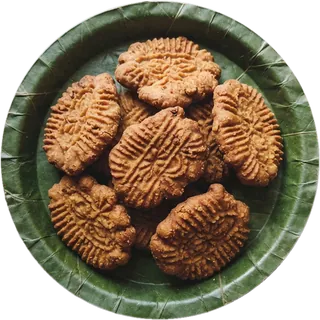
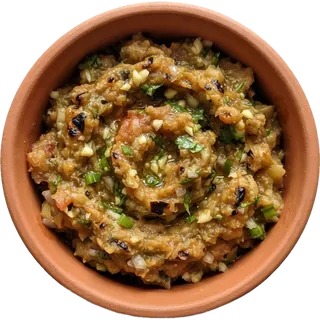
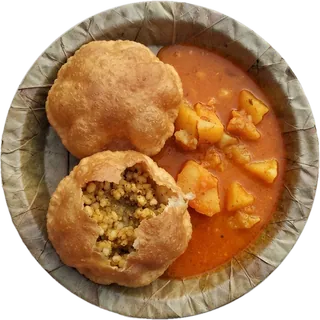
Litti chokha pairs wheat dough balls stuffed with spiced sattu and baked over cow-dung cakes or coals with chokha, a mash of roasted brinjal, potato and tomato dressed in mustard oil, a combination eaten across Bihar's Bhojpuri-speaking districts and sold at stalls throughout Patna.
How to order
एक प्लेट लिट्टी चोखा दीजिए।
At the stall, ask ‘इसमें घी डाला है क्या?’ — if the litti is already dipped, request it served dry with extra mustard oil instead.
History
Litti chokha is cooked across Bihar, particularly around Patna and the Bhojpuri-speaking districts, and also in eastern Uttar Pradesh and parts of Jharkhand. The litti is a ball of wheat dough packed with sattu, roasted gram flour mixed with mustard oil, ajwain, nigella and chopped pickle, then baked over cow-dung cakes or wood embers until the crust blisters. Households in villages still bake it this way at harvest gatherings and winter evenings, while dhabas and stalls in Patna now finish it on coal or in tandoors. It is served with chokha, mashed roasted brinjal, potato and tomato dressed with mustard oil, garlic and green chilli.
The litti dough itself is flour and water, and the sattu filling is roasted gram flour mixed with oil and spices, with no animal ingredient in either. Chokha, the mashed vegetable side, is dressed with mustard oil and raw onion and contains none either. The point where dairy enters is at serving: a baked litti is traditionally split open and dipped in melted ghee before it reaches the plate, which is how most roadside stalls and home kitchens finish it. Asking for the litti served dry, straight from the embers without the ghee dip, and spooned with extra mustard oil instead keeps the dish exactly as it is through the cooking, only changing the last step at the counter.
Where to get it
Roadside litti chokha stalls and small dhabas throughout Patna and across Bihar's Bhojpuri-speaking districts, especially on winter evenings and at highway stops; also sold at Chhath-season gatherings and village fairs.