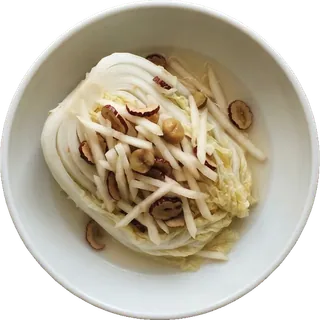
Chonggak-kimchi
Small ponytail radishes, greens and all, are salted, coated in a paste of chilli powder, garlic and salted shrimp, then packed whole into jars to ferment. It is a kimjang staple in Seoul and Gyeonggi-do kitchens, put up in late autumn alongside cabbage kimchi for the winter ahead.
How to order
여기 총각김치 젓갈 빼고 주세요.
Jeotgal is mixed into the chilli paste before the radishes are coated and packed into the jar, so it cannot be picked out once the kimchi is made; ask before buying with “여기 총각김치 젓갈 빼고 주세요.” At a market stall selling pre-made jars, this usually means asking the seller to point you to a batch already mixed without it, since a jar already packed cannot be remade on the spot.
History
Chonggak-kimchi (총각김치) takes its name from chonggak-mu, the small ponytail radish whose thin white root and leafy top were said to resemble the topknot young unmarried men wore before marriage. It is made across Seoul and the Gyeonggi-do towns around it, where the radishes are trimmed, salted, then coated whole in a paste of chilli powder, garlic, ginger and salted shrimp, greens and root packed into the jar together. Most households put it up during kimjang, the communal kimchi-making that falls in late November, alongside cabbage kimchi, to see a family through winter until the first spring radishes come in.
The base is plant throughout: radish, its greens, chilli powder, garlic, ginger and scallion. Salted shrimp or fish sauce — jeotgal — goes into the paste at the mixing stage, before the radishes are coated and packed into the jar, so it cannot be separated out once the kimchi is made. This dish carries no soup or stock, so the usual anchovy-kelp broth question does not arise, and no egg garnish is used; the one point to settle is the jeotgal in the paste itself, which some newer kimjang kitchens will omit if asked before mixing.
Where to get it
Panchan shops and market stalls in Seoul's Gyeongdong and Namdaemun markets, and home kitchens across Gyeonggi-do, sell it by the jar or by weight from late-autumn kimjang season through the winter months; a 1kg container runs 8,000-12,000 won.