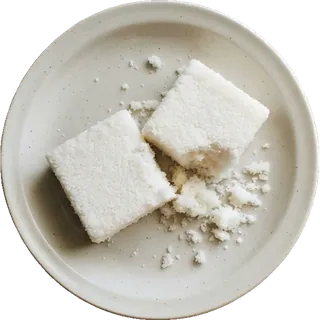
Dasik
Powdered sesame, pine pollen, ground bean or chestnut is kneaded with honey or syrup into a stiff paste, then pressed into a carved wooden mould to form small patterned discs. The discs are arranged by color on lacquered trays for ancestral memorial rites and royal court tables in Seoul, and served alongside tea.
How to order
혹시 꿀 대신 조청 넣은 다식 있어요?
Honey is kneaded into the powder before the dasik is pressed, so it is fixed in place well before the counter and cannot be removed afterward; ask whether a tray was made with jocheong instead, using '혹시 꿀 대신 조청 넣은 다식 있어요?' Shops that keep a temple-market trade often have a honey-free batch already made, since not all hangwa recipes default to honey.
History
Dasik (다식) traces to the tea ceremonies of the Goryeo dynasty and was refined under the Joseon court in Hanyang, present-day Seoul, where royal kitchens pressed pine pollen, sesame, rice flour and bean powders into dasikpan, wooden moulds carved with flowers and longevity symbols. After the court was dissolved under Japanese colonial rule in 1910, former court cooks carried the recipes into private households and teahouses. Today dasik is set out on ancestral rite tables at jesa and Chuseok, and served alongside tea in Seoul's traditional sweet shops, the colors kept separate: yellow from pine pollen, white from rice, black from sesame.
Dasik is not a kimchi or a stock-based dish, so the three usual points of concern do not apply: no jeotgal flavors the base, there is no myeolchi-yuksu beneath it, and no egg sits on top. The question is the binder. Most dasikpan recipes call for honey, kneaded hot into the powder before pressing; home and temple cooks substitute jocheong, rice syrup, or malt syrup, yeot, to the same result, since any thick syrup holds the powder together once stamped. Which binder is in use is settled before the dough is pressed, never afterward, so it has to be asked about before buying.
Where to get it
Hangwa shops in Insa-dong and around Jongno, Seoul, sell dasik year-round in small boxes for home ancestral tables, with trade picking up before Chuseok and Seollal; a gift box of a dozen pieces runs 15,000-25,000 KRW.