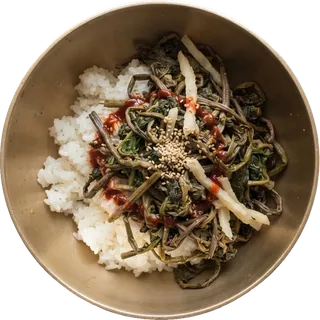
Deodeok
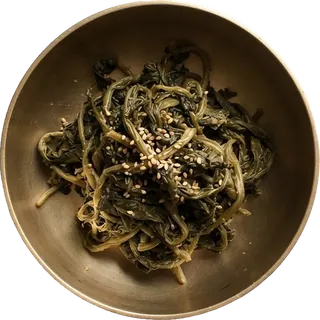
A fibrous mountain root, pounded flat with the back of a knife, brushed with gochujang and grilled until the edges char. It is eaten as a banchan or wrapped in lettuce at temple-food kitchens and roadside restaurants across Gangwon-do's mountain country, most often in autumn when the root is dug.
How to order
더덕구이 꿀은 빼고 해 주세요.
Ask whether the gochujang glaze is made with honey or jocheong (rice syrup) before the root goes on the grill, since once it is charred nothing can be wiped off: say “더덕구이 꿀은 빼고 해 주세요.” Most home-style kitchens in Gangwon-do already glaze with jocheong, but some add honey for shine, so it is worth confirming before ordering rather than after.
History
Deodeok (더덕) grows wild in the mountain ranges of Gangwon-do, around Pyeongchang, Jeongseon and Odaesan, dug from the hillsides in autumn, and is now also farmed there in the same cool, rocky soil. The root is peeled, soaked to cut its bitterness, then pounded flat with the back of a knife to loosen its fibers before it is brushed with a gochujang glaze and grilled over charcoal. It is eaten as a banchan at family tables, wrapped in lettuce as a ssam with rice, and served on the set tables of Buddhist temple-food restaurants near Odaesan, where its resinous scent is part of the dish's appeal.
Deodeok-gui itself touches none of the usual places animal product hides in Korean cooking — there is no jeotgal-seasoned kimchi paste here, no anchovy-and-kelp stock, no egg garnish. The variable is the sweetener stirred into the gochujang glaze: most home cooks and restaurants use jocheong (rice syrup), a plant sugar, but some recipes call for a spoonful of honey, usually added to the paste before the root is brushed, which cannot be picked out once it is grilled. Whether honey is in the glaze is the one thing worth asking before the dish comes out.
Where to get it
Mountain restaurants and temple-food kitchens around Odaesan and Pyeongchang in Gangwon-do, and roadside hanjeongsik counters on the way up to Daegwallyeong, serve it as a banchan or a grilled main through autumn and winter; a plate runs 10,000-20,000 won, and bundles of raw root sell at mountain markets for about 5,000-8,000 won.