Sanchae-bibimbap
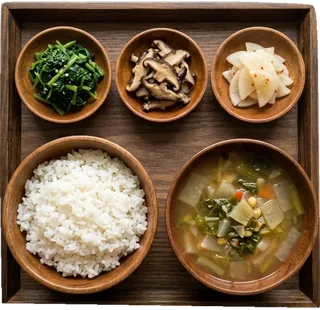
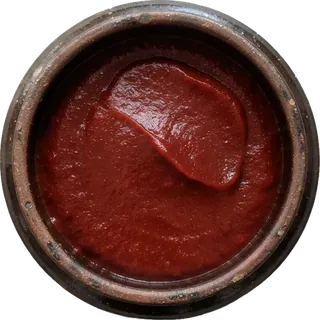
Dried wild greens gathered on Jirisan's slopes are rehydrated and seasoned separately, one by one, then laid over rice with gochujang and sesame oil to mix at the table. It is the version served at the foot of the mountain in Namwon and at temple guesthouses through North Jeolla and Gangwon.
How to order
산채비빔밥 계란 빼고 주세요.
The egg is fried separately and set on top just before the bowl is served, so it lifts off cleanly if you ask before it's plated: say “계란 빼고 주세요” (gyeran ppaego juseyo) when ordering. Temple guesthouse kitchens on Jirisan and at Woljeongsa in Gangwon serve it without egg as a matter of course, since egg is not part of temple cooking there.
History
Sanchae-bibimbap (산채비빔밥) takes its name from san-chae, mountain vegetables: gosari, bracken fern, chwinamul, aster greens, and doraji, bellflower root, gathered on Jirisan's slopes, dried through autumn, and soaked and seasoned separately rather than used fresh. Namwon, at the mountain's northern foot in North Jeolla, built its reputation on the dish alongside its better-known neighbor from Jeonju, while temple kitchens on Jirisan and in Gangwon's mountains, at Hwaeomsa and Woljeongsa, serve the same plate to monks and guesthouse visitors through the cold months, when the dried stores replace what fresh fields cannot provide.
None of the three usual hiding places for animal product apply in quite the way they do in other dishes: the gochujang stirred in is a soybean and chilli paste, not a seafood-based sauce, and the greens are seasoned with sesame oil and salt rather than built on anchovy-kelp stock. The one addition that is standard is a fried egg set on top just before serving, cooked separately from the rice and greens beneath it, so leaving it off changes nothing else in the bowl. Temple kitchens, which do not serve egg at all, leave it off by default; elsewhere it has to be asked for.
Where to get it
Namwon's restaurants near Gwanghallu serve it as a lunch set from late morning into early evening, the city's companion dish to Jeonju's version; temple guesthouses on Jirisan and at Woljeongsa in Gangwon's Odaesan serve a plainer, egg-free bowl with the evening meal. A plate runs ₩10,000-15,000 at a Namwon restaurant, included in the cost of a stay at a temple guesthouse.