Kongnamul
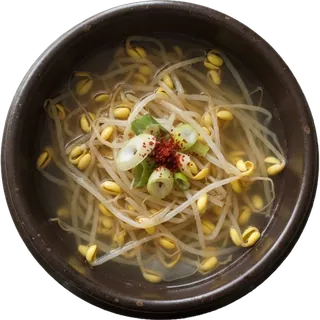
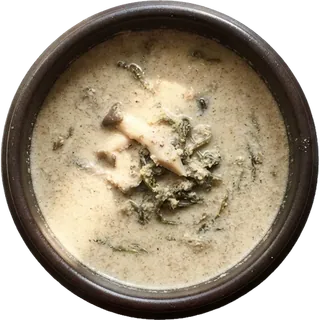
Soybean sprouts are grown in the dark for several days until the stem lengthens and the head turns pale yellow, then blanched and tossed with sesame oil, garlic, and salt. Jeonju, known for sprouts grown in its sandy soil, builds its signature soup, kongnamul gukbap, around them, served at breakfast counters through the morning.
How to order
콩나물국밥 계란 빼고 주세요.
The banchan form, kongnamul-muchim, needs no request: sprouts, sesame oil, garlic, and salt, nothing animal in it. The soup is different — kongnamul gukbap is built on a pot of myeolchi-yuksu made in advance for the whole kitchen, so asking for it without anchovy stock is usually not something the cook can do to order; only the egg can be left off, with “콩나물국밥 계란 빼고 주세요.”
History
Kongnamul (콩나물) are soybean sprouts grown in the dark for several days until the head yellows and the stem lengthens, a practice found in households and market stalls across the country. Jeonju, in North Jeolla province, is particularly known for them: its mineral-rich well water was long credited with producing firmer, sweeter sprouts, and the city built its signature dish, kongnamul gukbap, a soup of sprouts in broth poured over rice, around them. Sold blanched and dressed as a banchan on nearly every table, or simmered into soup, they appear at breakfast, at family meals, and at the memorial-rite table as one of the required vegetables.
The sprouts themselves are plant only: kongnamul-muchim, the banchan version, is blanched sprouts dressed with sesame oil, salt, garlic, and scallion, nothing more. The soup built from them in Jeonju is a different matter. Kongnamul gukbap is usually cooked in myeolchi-yuksu, a stock of dried anchovy and kelp, and is often finished with a raw or soft-poached egg cracked into the bowl at the table or the pass. The muchim needs no questions. The soup does: whether the stock is anchovy-based and whether egg is already in the bowl are both worth asking before it arrives.
Where to get it
Breakfast counters and family-run restaurants around Jeonju's hanok village and old town serve kongnamul gukbap from early morning into early afternoon, a bowl running ₩8,000-10,000; the plain muchim is sold loose by the kilo in markets and grocers nationwide, blanched and dressed to order.