Deulkkae-tang
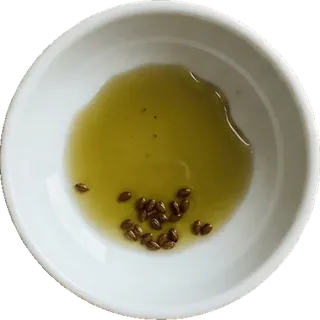
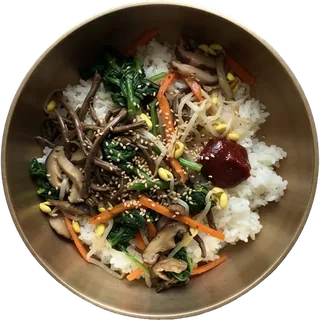
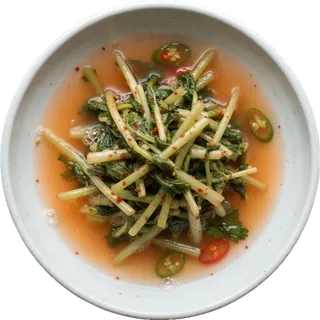
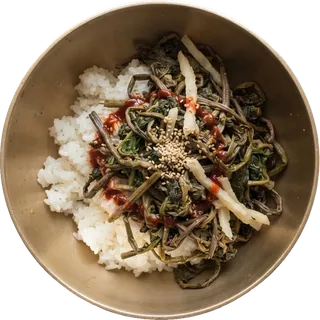
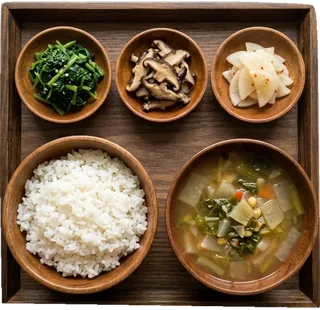
Perilla seeds are soaked, ground and strained into a pale milky base, then simmered with mushrooms and mountain greens until the soup thickens into something close to a chowder. Temple kitchens in Jeolla and Gangwon serve it in autumn, when wild greens and perilla are harvested together.
How to order
멸치 육수 빼고 들깨탕 주세요.
Ask with “멸치 육수 빼고 들깨탕 주세요” before ordering. Many countryside kitchens cook the stock once each morning for the whole day's service, so leaving out the anchovy may only be possible at a temple-food restaurant or a kitchen that makes the broth to order, not at a place working from a single shared pot.
History
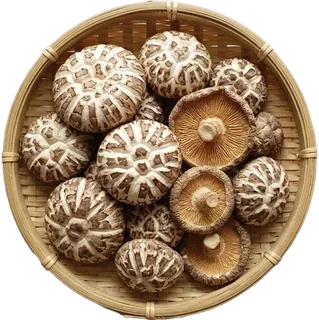
Deulkkae-tang (들깨탕) is cooked widely in inland Korea, where perilla has long been grown for both its oil and its seed. In Jeollabuk-do, temple kitchens toast the seed, grind it fine and strain the paste through muslin into a milky stock, then add whatever mushroom or wild green the season offers — gosari in spring, pyogo and neungi in autumn. In Gangwon-do, where winters run long in the mountain valleys, the same soup is made thicker, closer to a porridge, and serves as an everyday cold-weather meal in farming households rather than a dish kept for one festival date.
Outside temple kitchens, deulkkae-tang is often built on myeolchi-yuksu, a stock of dried anchovy and kelp simmered together, or finished with a handful of small clams or dried pollock for savor; none of that is announced on a menu, since stock is assumed rather than listed. Temple and most home versions, by contrast, run on dasima (kelp) stock alone, with the mushrooms doing the work a fish stock would otherwise do, and this dish carries no jeotgal and no egg garnish to check. What has to be settled before ordering is the stock itself — whether the kitchen's pot started with kelp alone or with anchovy added.
Where to get it
Temple-food restaurants near the mountain temples of Jeollabuk-do, and rural kitchens in Gangwon-do's Pyeongchang and Jeongseon areas, serve it through autumn as mushrooms and wild greens come in; a bowl runs 12,000-18,000 won at a temple-food restaurant, less at a roadside farmhouse kitchen.