Deulgireum
Perilla seeds are roasted until fragrant, then cold-pressed into a green-gold oil that turns rancid within weeks of opening, so it is sold in small dark bottles bought often rather than stored. It is stirred into namul and rice in homes across Jeolla and Gyeongsang, and is the standard seasoning fat of Buddhist temple kitchens.
How to order
들기름 비빔밥은 계란 빼고 주세요.
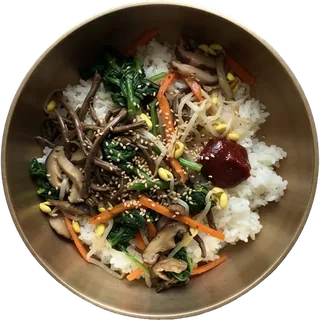
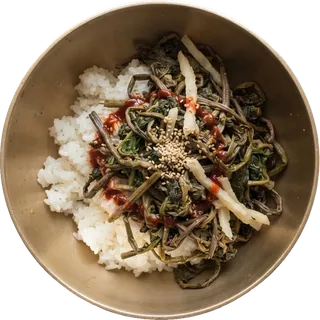
Deulgireum bibimbap often comes with a fried egg on top; ask for it without using “들기름 비빔밥은 계란 빼고 주세요,” which most sikdang can manage since the egg sits on top rather than being mixed into the rice. If the namul underneath was seasoned with an anchovy-stock-based sauce, that is harder to leave out once it's already mixed in, so it's worth asking what the namul was dressed with as well.
History
Deulgireum (들기름) is pressed from the seed of the perilla plant, deulkkae, grown on small plots across Jeollabuk-do and Gyeongsangbuk-do and roasted over low heat before pressing to bring out its aroma. Farm households have made it this way for generations, taking sacks of seed to a village press rather than a factory, and a fresh bottle is a common Chuseok or Seollal gift between relatives. It is drizzled raw over rice, mixed into namul, or used to finish soup just before serving, since heat destroys its flavor quickly, and it is the fat most associated with Buddhist temple cooking, where sesame oil is considered too rich.
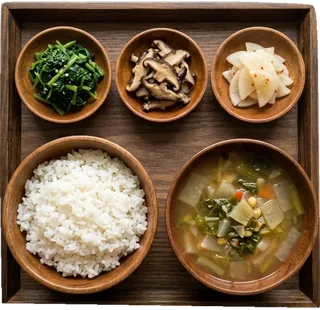
The oil itself is a single plant ingredient, seed and nothing else, pressed without any stage where fish sauce, meat stock or egg could enter. The three places animal product usually hides in Korean cooking — jeotgal (젓갈) in kimchi paste, myeolchi-yuksu, dried anchovy and kelp stock, under soups, and egg as a garnish — apply to the dishes it seasons, not to the oil itself, so a bottle of deulgireum is plant-based from seed to bottle. What needs asking about is the namul or soup it's stirred into afterward, since those often carry anchovy stock or egg on top, not the oil.
Where to get it
Sold fresh-pressed at gireumjip (oil-press shops) inside traditional markets such as Jeonju's Nambu Market in Jeollabuk-do and smaller town markets across Gyeongsangbuk-do, where customers bring their own roasted seed to be pressed on the spot or buy a bottle already made. A 500 ml bottle runs about 15,000-25,000 won, more than twice the price of sesame oil, and sells fastest in the weeks before Chuseok and Seollal, when it is bought as a gift.