Gochujang
Chilli powder is worked into glutinous rice flour, powdered meju and barley malt, then packed into earthenware crocks to ferment in the sun for months. Sunchang county in North Jeolla has made it by name for six centuries, and it is sold there by the jar at roadside markets.
How to order
고추장 한 통 주세요.
Nothing needs to be confirmed, since the paste is rice, chilli, soybean, barley malt and salt at every stage and carries no jeotgal, stock or egg. At a market stall the only question worth asking is whether a jar is the slow, long-aged ferment or a faster-aged batch — “재래식이에요?” (“Is this the traditional method?”) — which changes the taste, not the ingredients.
History
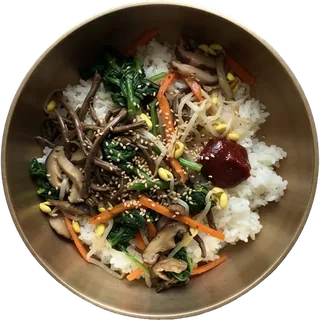
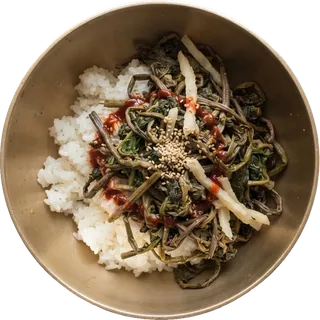
Gochujang (고추장) is a fermented chilli paste made from gochugaru worked into glutinous rice flour, powdered meju — dried fermented soybean blocks made each winter — and barley malt, then salted and packed into an onggi jar left on the jangdokdae terrace to ferment through spring and summer sun. Sunchang county in North Jeolla has made it by name for six centuries and still supplies much of the country's handmade paste. It is stirred into bibimbap, thinned for ssamjang at the grill, and worked into tteokbokki sauce at street stalls, a spoonful finishing nearly every savoury dish in a Korean kitchen.
Gochujang itself touches none of the three places animal product usually enters Korean cooking: jeotgal, the salted seafood folded into kimchi paste; myeolchi-yuksu, the dried anchovy and kelp stock under most soups and noodles; or egg laid on top as garnish. The paste is rice, chilli, soybean, barley malt and salt, fermented without any addition of fish, meat or dairy at any stage of the process. What has to be checked is not the jar itself but what it is stirred into afterward — tteokbokki simmered in anchovy stock, or a stew built on meat broth — since gochujang only flavors whatever base it joins.
Where to get it
Roadside stalls and jang shops around the Sunchang Traditional Gochujang Village in Sunchang county, North Jeolla, open year-round, plus any grocery market nationwide; a small jar runs ₩10,000-20,000, more for pastes aged two years or longer.